Give AI the Goal, Not the Recipe
Two AI models just cracked WWII Enigma messages that stumped researchers for nearly twenty years. The method they used is a prompting playbook you can steal for your hardest business problems today.
What happened with the Enigma messages

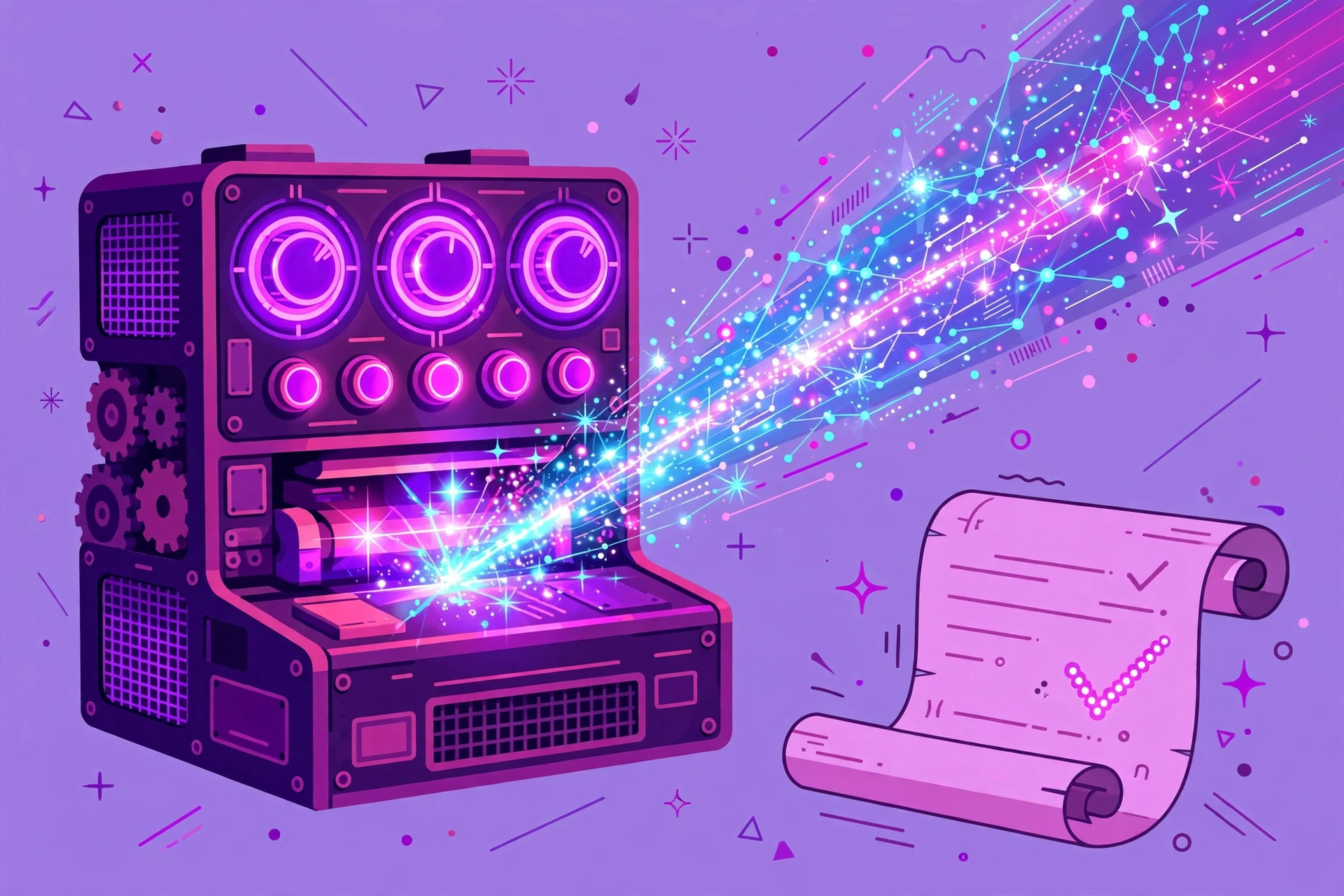
The Neuron's AI Skill of the Day told a wild story this week. Developer Carter Leffen handed GPT 6 Astra a loose mission: find an unsolved Enigma message in an archive and decode it. The model researched the history on its own, built its own Enigma simulator, and recovered readable text from a message that had sat unsolved since 2005. A second researcher got a Claude model to crack another one, with more hand holding and one known clue to start from.
The details matter less than the method. Nobody fed the model a recipe. They handed it a goal, one fact they were sure of, and room to build its own tools. That is the part worth stealing.
The Neuron (Oct 8, 2026), AI Skill of the Day: Give AI the goal, not the recipe
The playbook, translated for your business
Most people prompt like a manager who does not trust the help. Do step one, then step two, then step three, in exactly this format. That style caps the model at your own imagination. The Enigma runs worked because the instructions flipped: outcome first, research second, tools third, verification last.
Try it on a real problem. Reconciling a messy month of invoices. Figuring out why one reel outperformed everything else on your page. Planning a launch with too many moving parts. State the outcome, give the model one fact you know is true, let it research and build what it needs, then make it show you how to check the answer against something real.
- Give a goal, not a recipe. Describe the outcome and let the AI research first.
- Let it build its own tools: a script, a spreadsheet, a simulator, whatever the problem needs.
- Feed it one fact you are sure of. A known clue narrows the whole search.
- Check the result against something real before you trust it or ship it.
Where this fits my workflow

This is the same shift running through everything I published this week. Cheap models handling routine work under a strong model's direction. Agents routing each task to the best model for the job. In every case, the human edge is the same: setting the goal clearly and checking the result honestly.
That is also why I keep my clarity rule. A goal stated badly gets you a polished answer to the wrong problem. Say what done looks like, in plain words, and the tools will surprise you.
Your AI assistant just became a model picker · ChatGPT builds apps now: what creators should do with GPT 6's Intelligent UI
Your move
Pick the problem you have been avoiding because it feels too tangled. Write the goal in one sentence. Add the one fact you know for sure. Ask the model to research first, build what it needs, and finish by telling you how to verify the answer. Then actually verify it. That last step is the difference between a demo and a result.
Sources and further reading
- The Neuron (Oct 8, 2026), AI Skill of the Day: Give AI the goal, not the recipe
- Your AI assistant just became a model picker
- ChatGPT builds apps now: what creators should do with GPT 6's Intelligent UI
Sources were checked for this article. Tool features, prices and availability can change. Product claims are attributed to their publishers.