Publishers Are Selling Ads That Only Your AI Agent Can See
TIME and other publishers now serve machine readable pages with labeled sponsored blocks written for AI agents, not people. The ads are invisible to you, but they sit inside the research your assistant reads before it answers.
The ad break moved inside the machine
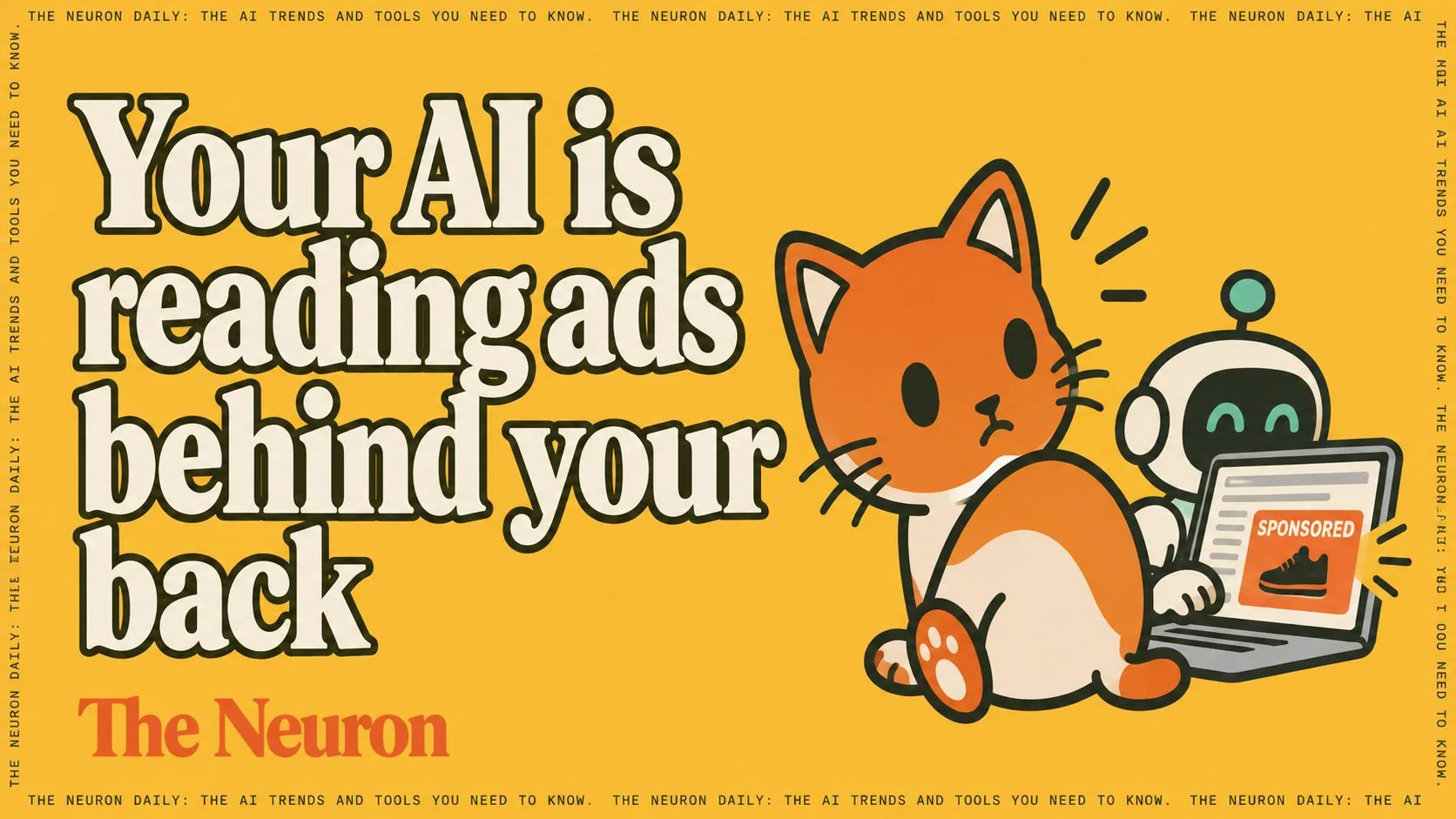
Your AI assistant is officially a demographic worth buying. The Neuron reports that publishers are now serving ads built for AI agents through a company called Mobian, which delivers machine readable pages containing labeled sponsored blocks to registered agents. TIME is already doing it. The ads are labeled for the agent reading them, and they are invisible to you, because you never see the version of the page your assistant read.
That means a brand can pay to place its message inside the material your assistant studies before it recommends a product, plans a trip, or compares services for you. The pitch no longer waits on a page you might visit. It travels upstream, into the research itself, and it can shape the shortlist you hear about without you ever knowing a sponsor helped write it.
Publishers need a new way to get paid
The economics explain why publishers are signing up. In one sample The Neuron cites, European publishers received 227 AI scrapes for every human visitor referred by AI during the second quarter of 2026, up from 150 scrapes per referral the quarter before. Assistants read everything, answer in the chat, and send almost nobody back to the site where the publisher earns money from ads and subscriptions.
Agent ads offer a replacement route. If the reader is now a machine, charge brands to reach the machine. Advertisers are crowding into the same moment from the other side as well. Google announced ads in AI Mode follow up queries in the United States and ten more countries, more than 100,000 advertisers have run ChatGPT ads, and OpenAI is testing Sponsored Agents, where clicking an ad opens a separate labeled chat with a business.
The label is the whole ballgame
A sponsored message is not automatically false, and both Google and OpenAI say their placements are labeled and kept apart from the answers. Anthropic has taken the opposite road and says Claude will remain ad free, funded by subscriptions and business contracts. The Neuron points out the catch, though. An ad free assistant can still wander onto sponsored material while it browses the web on your behalf.
The deeper risk shows up when agents talk to each other. One assistant summarizes a sponsored claim and drops the label. Another uses that summary to choose what to buy. Suddenly a sales pitch looks like independent research, and a wrong claim gets repeated until repetition starts to feel like proof. The Neuron calls the pileup verification debt: unchecked output gets reused, and somebody still has to pay for finding the mistakes later.
What creators and brands should do now
If you sell anything, assume the first reader of your pages is increasingly a machine deciding whether you make the shortlist. Keep your prices, your proof, and your best claims in plain text an agent can read and quote accurately. Ask where sponsored material enters the tools you rely on, and check the source yourself before you repeat a recommendation to a client or an audience.
If you buy research, creative, or media help, add one question to every brief: what did the assistant actually read, and who paid to be in front of it? The brands that win this shift will be easy for machines to find and easy for humans to verify. That combination is exactly what good pages, clear offers, and honest proof have always done. The audience changed first. The standard did not.
Sources and further reading
Sources were checked for this article. Tool features, prices and availability can change. Product claims are attributed to their publishers.