Microsoft Put Its School AI Promises in a Contract Schools Can Enforce
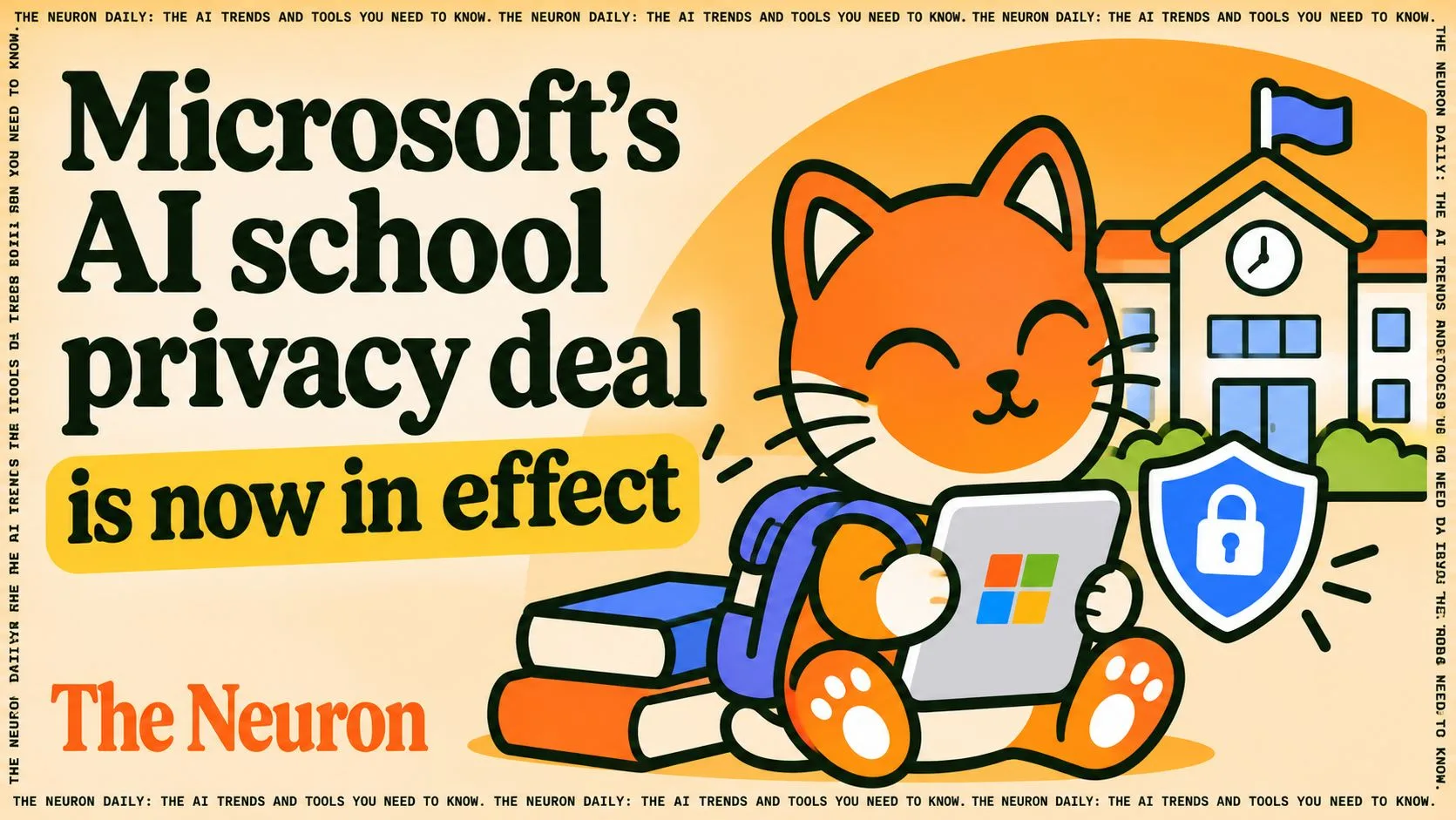
Microsoft's AI Safety and Privacy Standard for schools took effect November 1, and it lives in the contract, not on a webpage. No training on student data, no ads, no AI companions, and districts can cancel and seek damages if the rules break.
A promise you can actually enforce
When an AI company promises to protect student data, the promise usually lives on a webpage the company can quietly edit later. Microsoft's new promise to schools lives in the contract. The Neuron reports that the AI Safety and Privacy Standard, announced September 9 by Microsoft with the American Federation of Teachers and the United Federation of Teachers, took effect on November 1.
Any school district in the United States can add the standard to a new or existing Microsoft agreement, with no renegotiation or renewal required. Once it is written in, the district can cancel the agreement and seek damages if Microsoft breaks the rules. Microsoft also accepted annual certification, audit rights, and a deadline to fix security problems. That is a very different animal from a trust page and a blog post.
What the standard actually bans
The terms are plain enough for any parent to follow. No training AI models on student or educator data, a permanent ban with one narrow safety and security exception. No selling student data and no using it for advertising. No tracking students, and no AI companions, meaning chatbots built to act like a friend. Human review stays required for high risk decisions, so AI can assist but people decide.
Breaches must be reported within 72 hours, and violations get fixed or AI use gets paused or ended. The training ban is the one to remember. Training means feeding data back into a model so it learns from it, which is how a student essay draft or homework question could end up shaping the next version of the tool. The standard closes that door in writing, with penalties attached.
The union wrote rules because the law is old
The teachers unions pushed for a contract because the law never anticipated any of this. AFT president Randi Weingarten noted that older rules covering student records and health data were written long before generative AI existed, and Fortune reported that the federal law on children's data online predates the technology as well. So the union reached for leverage it already had: the purchasing agreement.
Notably, the union behind the deal is not asking for AI everywhere. UFT president Michael Mulgrew said AI use in grades K through 8 is not appropriate right now, and New York City public schools had just announced a one year pause on AI. The standard stays silent on whether classrooms should use AI at all. It only sets enforceable terms for the districts that choose to.
Watch who signs next
So far the standard binds one company. Weingarten said OpenAI and Anthropic have expressed willingness to sign, an Anthropic spokesperson told Fortune the company has worked with the AFT on a safety and privacy standard, and OpenAI did not respond. The Neuron also notes that Microsoft's own fact sheet describes its AI products in general without naming exactly which ones are covered.
For anyone who sells technology, training, or creative services into schools and youth programs in Florida, the lesson travels well beyond Microsoft. Buyers are learning to ask for promises in contracts, with audits and deadlines, instead of promises in marketing. If your offer touches kids, families, or student work, write your data rules down before a client asks. The vendors who treat that as a selling point, not a burden, will be ready when the standard becomes the default.
Sources and further reading
Sources were checked for this article. Tool features, prices and availability can change. Product claims are attributed to their publishers.