Proton Scrapped Its AI Use Interviews After Staff Pushed Back
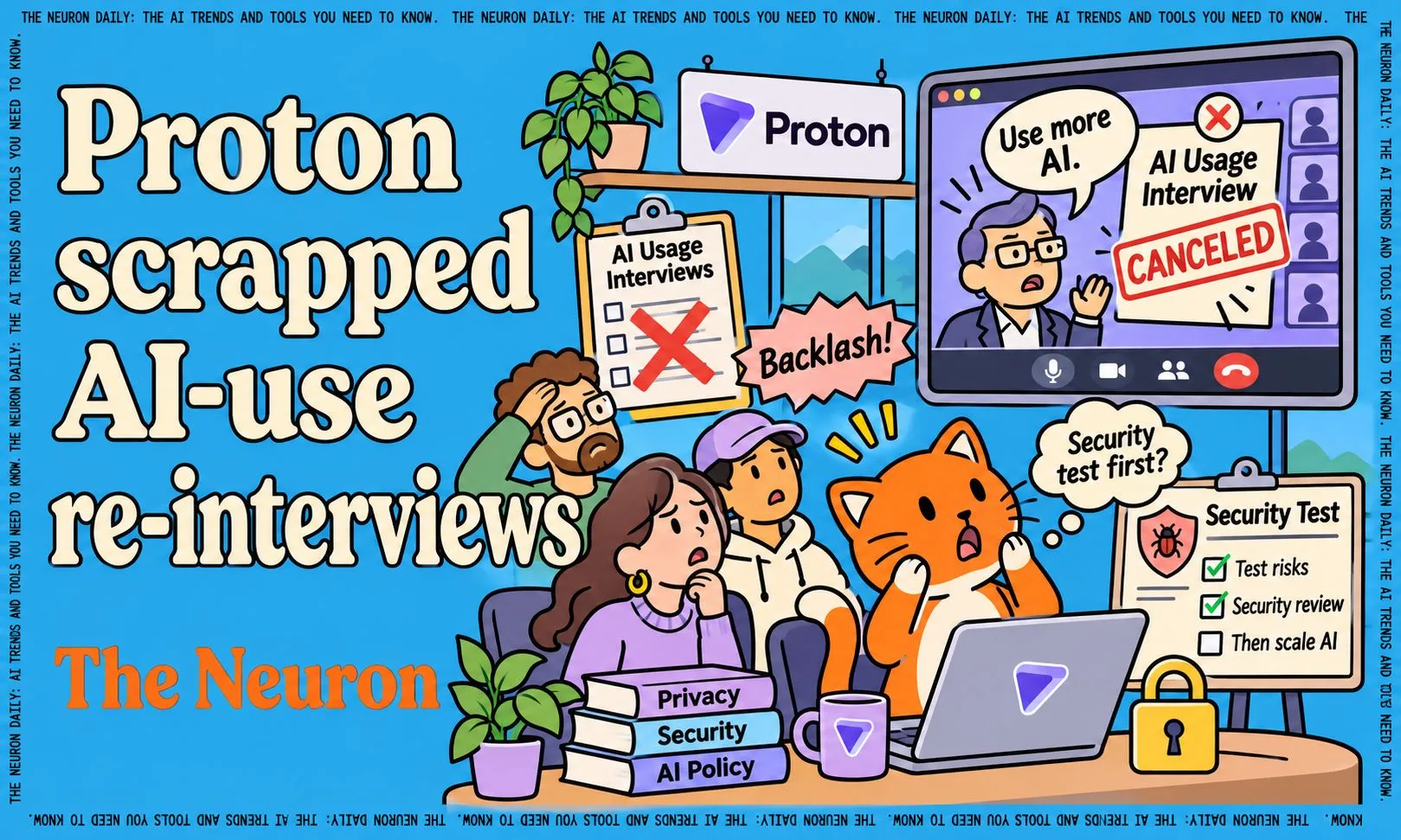
Proton planned to interview nearly its whole staff about how they use AI, until employees and users pushed back and CEO Andy Yen canceled the plan. The fight is really about what a company measures: activity in a tool, or work that ships safely.
The plan that sparked the backlash
Proton is the privacy company behind Proton Mail and Proton VPN, so its customers pay for one promise above all others: keep private things private. The Neuron reports that CEO Andy Yen planned a second round of interviews with nearly the whole company, where employees would explain how they use AI. The story rests on six current employees and audio from a roughly two hour all hands meeting.
Employees told 404 Media they believed people who used AI too little could be fired. A 404 Media investigation the day before the cancellation showed Yen pushing AI hard across Proton, sometimes over security concerns. Staff and Proton users pushed back, and Yen dropped the interviews. The speed of the reversal is the first clue about what was really at stake.
A security check became the flashpoint
The detail that keeps coming up is a small, careful suggestion from late August. An employee in Proton's security Slack channel suggested spending a few days on penetration testing before releasing new code. That means attacking your own software the way a hacker would, so you find the holes first.
Yen reportedly brushed the idea off as a loser's mindset and told staff to stop handcrafting code and use AI more. That lands hard at this company. People pay Proton to keep their private stuff private, so a CEO pushing speed over a security check hits the one thing customers care about most. Users have been vocal about exactly that, and some called for Yen to resign. The report does not say how the interviews would have worked, how many employees were involved beyond nearly everyone, or whether Proton is changing its approach to AI. Proton did not provide a comment in the article.
Counting use measures the wrong thing
The Neuron's interpretation is the part worth keeping. Counting AI use measures activity. It cannot tell the engineer who used AI to ship clean work from the one who used it to look compliant. And once usage gets graded, the careful person who asks for a security test starts to look like the slow one.
That is a management trap, not just a Proton problem. Any team that rewards visible tool time will eventually get more visible tool time, whether or not the work got better. A log of hours in a chat window says nothing about whether the output was checked, whether the risks were tested, or whether the result held up after release.
What to take into your own workplace
If your boss ever asks how you use AI, answer with results, not hours. The Neuron's own tip for the week points the same way: keep a weekly log of what you asked AI to do, what you checked or changed yourself, and what came out the other end, with a number only if you gave the tool a real one. That record holds up in a review because it puts your judgment right next to the tool's output.
If you hire creators, editors, or developers, judge the same way. Ask what they shipped, what they verified, and what they caught before delivery. And if you lead a team, protect time for review as a real part of the job, not a delay to be squeezed out. Speed without a check is not productivity. It is debt, and at a privacy company, that debt gets paid in trust.
Sources and further reading
Sources were checked for this article. Tool features, prices and availability can change. Product claims are attributed to their publishers.