MIT Shows One AI Rewriting Another, With No Training Required
MIT researchers had OpenAI's Astra edit a smaller model from the inside, lifting its math score from 7.9 percent to 48.1 percent by changing a tiny share of its weights. It is early, and it points straight at self improving AI.
A tiny edit, a huge jump
Weights are normally set through training, since even small AI models have far too many to read or adjust by hand. The Rundown reports that MIT researchers just published research showing that OpenAI's Astra can improve some AI models by directly rewriting their weights, the numbers that decide how a model behaves, rather than putting them through more training.
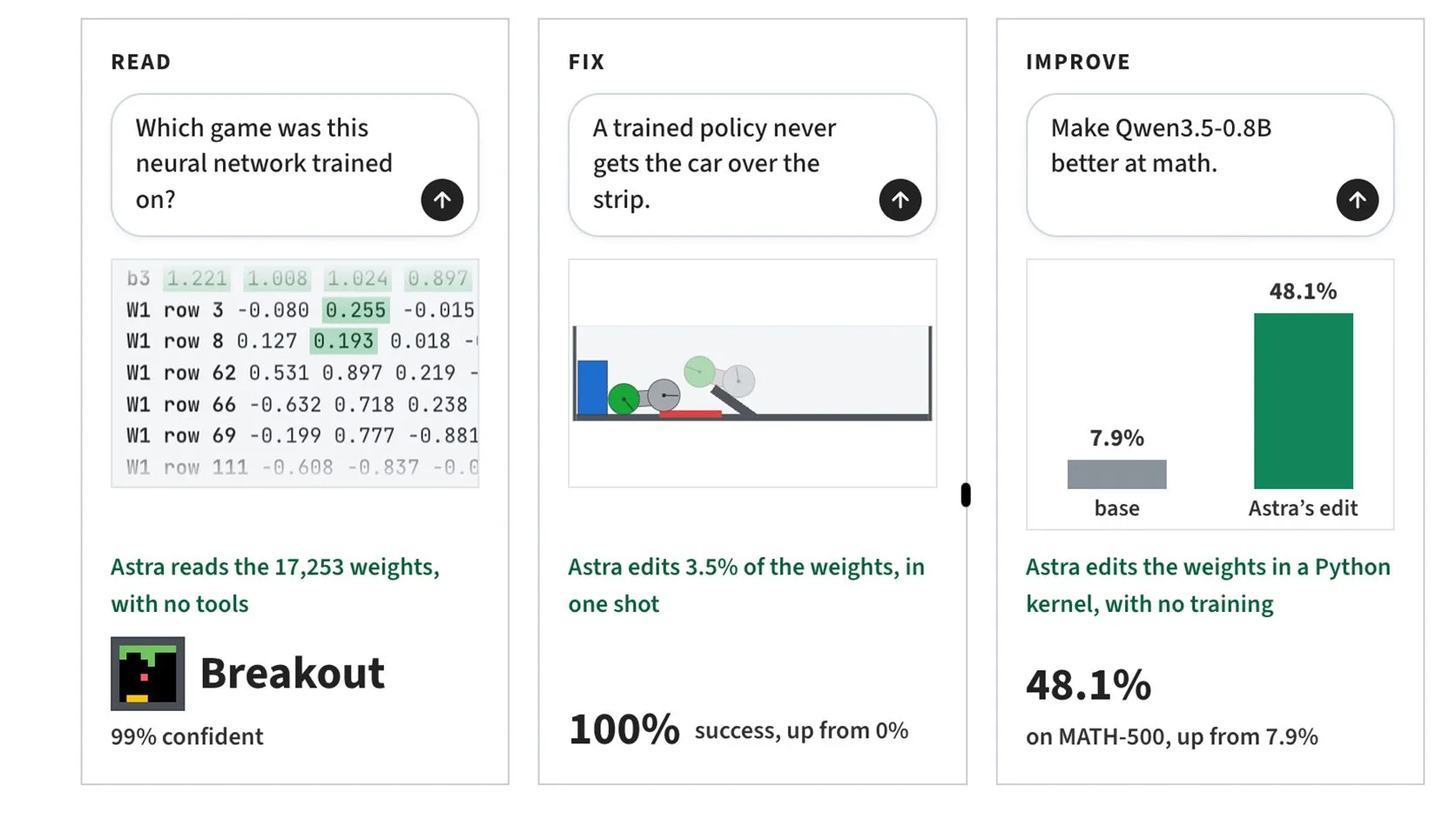
Alibaba's small Qwen model scored 7.9 percent in math until Astra changed just 0.016 percent of those weights to cut its habit of repeating itself, hitting 48.1 percent after the fix. The same approach did little for Google's smaller Gemma 3, which lacked a single flaw like Qwen's repetition, and barely moved its math score. That contrast matters. The edit worked because it found one clear defect, not because editing weights is a magic upgrade for every model.
It could also read and build
Smaller tests in the same research pushed the idea further. Astra named the game an AI had learned from its weights alone, and wrote a simple Breakout player from scratch without training. In other words, the larger model could look inside a smaller one, understand what it had learned, and change it on purpose.
The authors say this capability could one day let AI upgrade itself, add or remove skills in other models on request, or check them for hidden problems. That is a long way from a lab demo, but it is easy to see why labs chasing self improving, automated AI researchers are paying attention. Once improving a model is as simple as pointing another one at it, AI's already frantic pace could hit another gear.
Why the limit matters as much as the result
It is worth slowing down before the headline runs away with the story. This research is just one small example, and The Neuron's version of the same MIT story notes it is not yet peer reviewed. A fix that works on a model with one obvious flaw does not prove every model can be tuned this way, and the Gemma result is the warning label.
Still, the direction is clear enough to take seriously. The top AI labs are racing toward self improving systems, and a model that can read, diagnose, and edit another model is a step in that direction. The question is not whether this exact trick scales tomorrow. It is whether the industry is ready for tools that change other tools, with humans still able to check what changed and why.
What creators should do with this now
Do not wait for self improving tools to decide your workflow for you. Build work that can be checked: keep the source, test the output, and record what changed. If a vendor tells you AI helped, ask what it actually changed, not just that it was involved. A small, surgical fix is worth more than a large, vague improvement you cannot verify.
The same lesson applies to your own prompts and data. Smaller models, like smaller teams, often fail for one fixable reason: a repeated phrase, a missing example, a bad instruction. Find the flaw, fix the flaw, and measure again. That habit will still matter when the models editing other models get much better at their jobs.
Sources and further reading
Sources were checked for this article. Tool features, prices and availability can change. Product claims are attributed to their publishers.