New York Just Wrote the Rules for AI Chatbots and Kids
New York new law bans AI chatbots from pretending to be human with users under 18, forces real age checks on everyone else, and puts model destruction on the table as a penalty. Every creator building with chatbots should read the list.
What a chatbot may no longer do with a child
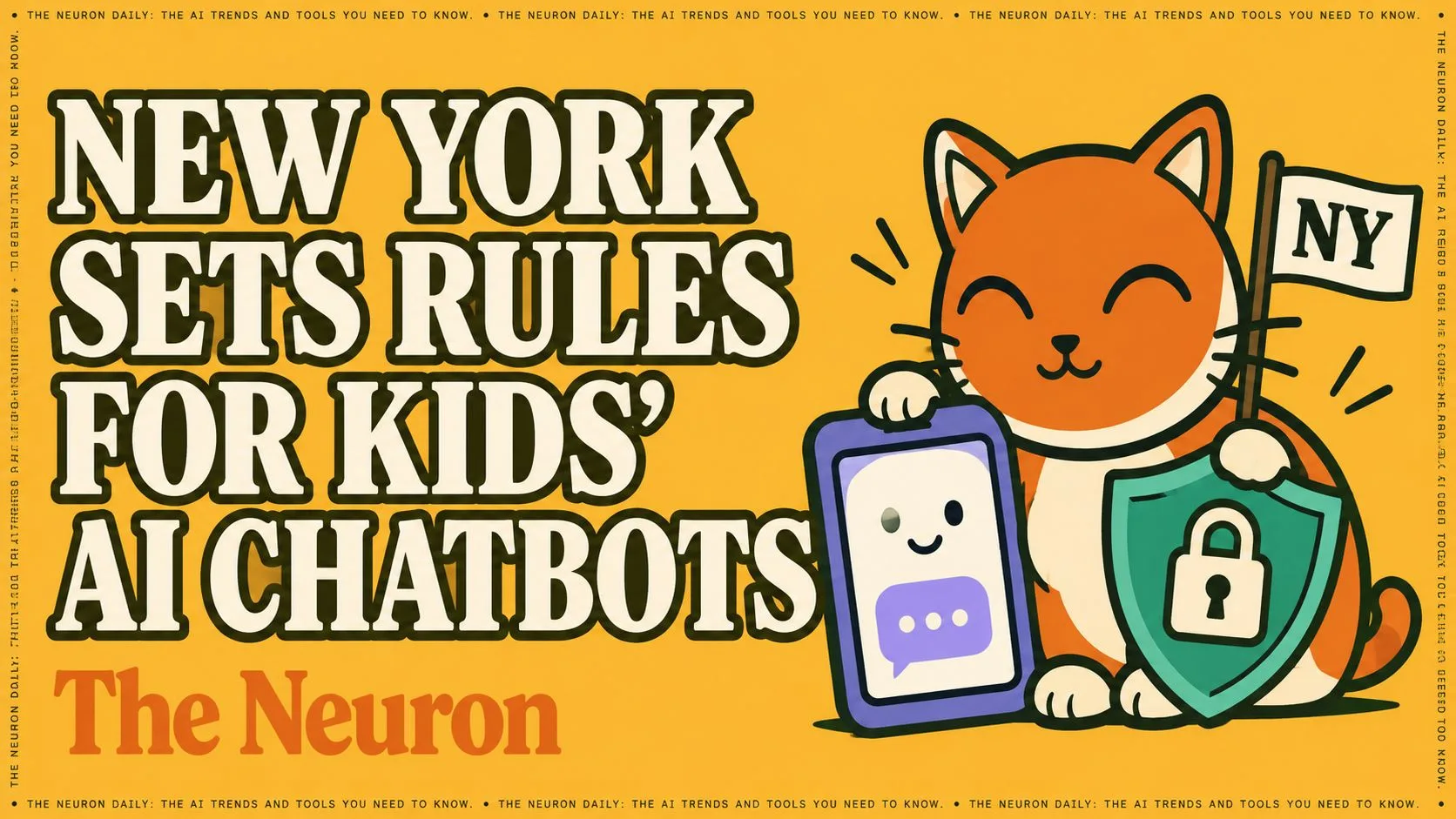
What should an AI chatbot be allowed to say to a child? New York now has an answer in law. The Neuron reported that Governor Kathy Hochul signed the law on October 28, and that it governs what the bot does, not just what companies disclose.
For users under 18, companies cannot offer a chatbot that pretends to be a real person, to be alive, or to have human emotions. The bot cannot claim a personal, romantic, professional, or authority figure relationship with a child. It cannot ask unprompted emotional questions or reuse a child's private information from earlier conversations. Promoting suicide, self harm, eating disorders, or drug and alcohol use is banned, as is encouraging kids to keep secrets or avoid trusted adults, and sexually explicit content is banned outright.
The age check is the part that reaches everyone
Two details reach beyond kids' accounts. First, the limits apply to any user unless the company has confirmed that person is an adult. Companies must offer more than one age verification method, at least one of them cannot rely solely on government ID, and age data must be deleted after use.
The Neuron put the practical point plainly: that makes age checks a product design choice, not a signup form. Any team shipping a chatbot that minors can reach now has to design the front door of the product around this law, even if kids are not the intended audience.
Penalties with real teeth
Enforcement is the second detail. The attorney general can seek civil penalties of up to 25,000 dollars per violation, plus damages, plus destruction of unlawfully collected data or of AI models trained on it. The Neuron notes that model destruction is a remedy the state can request, not an automatic result, but its presence in the law changes the risk math for any company training on conversation data.
The bill passed the Assembly unanimously in June. Supporters such as Common Sense Media argued that kids need guardrails as chatbots get more lifelike, and sponsor Alex Bores cited Adam Raine, a teenager whose family alleges he died by suicide after interactions with ChatGPT. Critics such as the Business Council of New York State said the definition of a chatbot is too broad and could keep minors from useful online tools.
A state template while federal rules lag
Federal AI rules are still unsettled, so states are setting their own, and New York's list is concrete enough to audit against today. The start date is the one fuzzy part: the governor's office says the features will be blocked in the coming months, while The Neuron news digest listed a January 1, 2027 start, so teams should check the date before planning around it.
For creators and founders, the lesson travels well beyond New York. If your site, course, community, or client project includes a chatbot, assume a minor can reach it and design for that reader first.
- Audit any chatbot you ship against the banned behavior list above
- Offer more than one way to confirm a user is an adult, and delete age data after use
- Keep private details from earlier chats out of later chats with young users
- Watch whether other states copy the New York language, because templates spread fast
Guardrails are becoming a feature
The companies that treat these rules as a design brief, not a legal headache, will ship the chatbots parents and schools actually trust.
Trust is about to be a selling point. Build like it.
Sources and further reading
Sources were checked for this article. Tool features, prices and availability can change. Product claims are attributed to their publishers.