Google Genie 4 Builds AI Worlds You Can Talk To
Google DeepMind Genie 4 turns a prompt into a photorealistic world you can walk through, complete with its own sound and characters who hold live conversations. It looks like a director tool as much as a game engine.
A world you step into, not a clip you watch
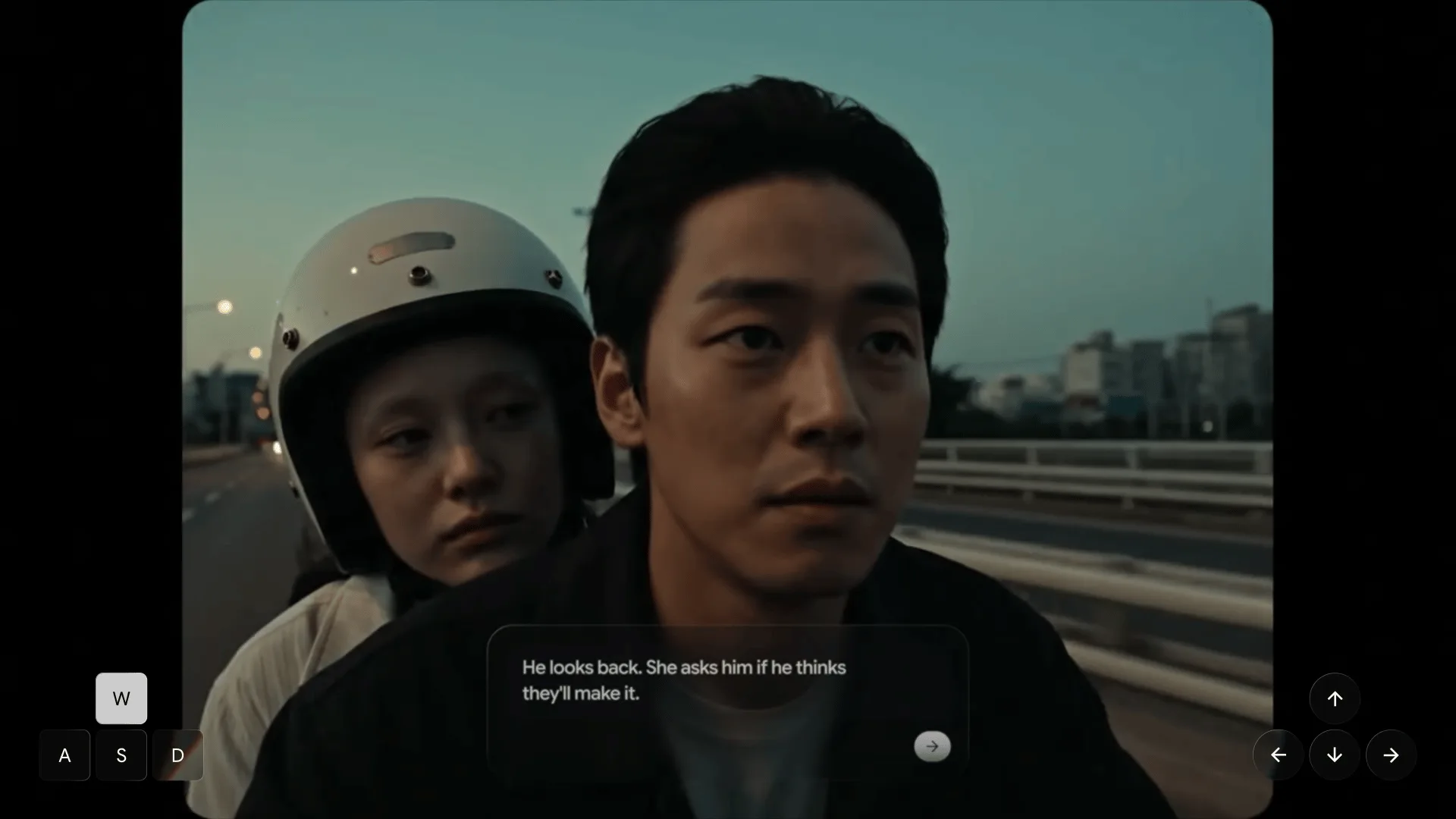
Most AI video tools hand you a finished clip. Google DeepMind Genie 4 hands you a place. The Rundown AI and The Neuron both led their October 28 editions with the new world model, which turns prompts into explorable, photorealistic scenes that respond as you move through them in real time.
The jump from Genie 3 is sound and company. Genie 4 is the first model in the line to generate its own audio, from background noise to music, and the characters living in its worlds can now hold live conversations with the person exploring them. Last year you could wander an AI world for a few minutes. Now the people inside it talk back.
How it works on screen
Users move with keyboard controls and can type prompts to change the scene while standing inside it, with the world staying coherent between inputs. Ask for weather, a new object, or a different mood, and the scene adjusts around you instead of restarting.
Google also showed the model working as a training ground. In one demo reported by both newsletters, a simulated Apptronik Apollo humanoid robot played checkers inside a Genie world, with a Gemini model planning each move. The point of the demo is where Google wants this to go: robots rehearsing inside generated worlds before they ever touch a real room.
Why filmmakers should care
The Neuron spelled out the creative uses plainly. Filmmakers could preview virtual sets before spending money on production. Game developers could test a level before building it by hand. A director could scout a location that does not exist, block a scene inside it, and show a client the world before a single dollar goes to a set build.
That reframes what the tool is. The Rundown AI put it this way in spirit: Genie is starting to look as much like a full director tool as a world simulator. A clip generator makes footage. A world model makes a place a whole production can stand inside, revise, and rehearse in.
The honest limits
Genie 4 is still a research preview. Access starts with trusted testers, and Google AI Ultra subscribers and Gemini API partners come next, according to The Rundown AI. The Neuron added the catch that matters most: objects, physics, and spatial details can still drift and turn inconsistent, especially in longer sessions.
So the test to watch is staying power. A beautiful two minute world is a demo. A world that keeps the same objects, rules, and consequences for an hour is a production tool, and that is the breakthrough still being proven.
The shift underneath the demo
AI media is moving from finished files to living environments. The value is shifting from the clip itself to the world the clip happens in, because a world can be reused, restaged, and reshot at almost no cost.
For creators, the practical move is to start thinking in worlds, not shots. The people who learn to direct inside generated environments early will hold an advantage when clients start asking for them.
- Use world models for previz: scout and block scenes before a paid shoot day
- Build one reusable world per client instead of starting every video from zero
- Test how a scene plays before committing crew, locations, and rentals
- Watch session length and consistency, because that is where the tool proves itself
Places, not clips
Genie 4 with sound and conversation is not a better video generator. It is a different category of tool, and categories are where the money moves first.
Learn to direct a place, and every shoot inside it gets cheaper from there.
Sources and further reading
- The Rundown AI: Google AI worlds can now talk back (October 28, 2026)
- The Neuron: Google launches Genie 4 with sound (October 28, 2026)
Sources were checked for this article. Tool features, prices and availability can change. Product claims are attributed to their publishers.