OpenAI Terra Cuts the Cost of Letting AI Use Your Computer
GPT 6.1 Terra is built for computer use at half the price of the model it replaces. OpenAI says it finishes tasks over three times faster than its priciest models, and independent tests tell a smaller, still useful story.
A model built to do office work
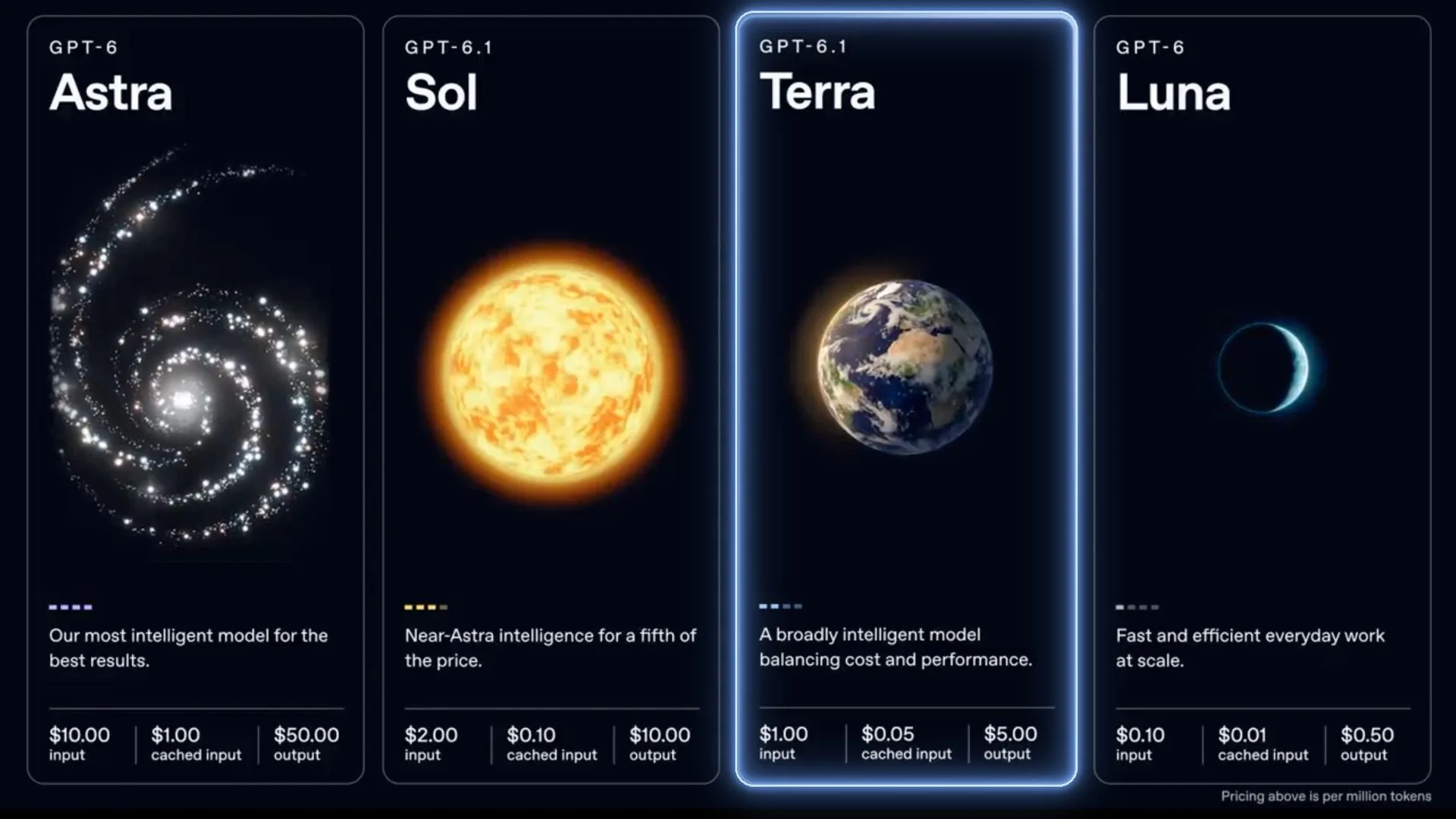
Terra is the middle model in the OpenAI lineup, built for computer use. It looks at a screen and then clicks, types, and moves between applications the way a person would. The Neuron gives the plainest example: reading incoming invoices and entering the details into accounting software.
The Rundown AI reports that GPT 6.1 Terra is now live in ChatGPT and in the Codex coding tool at half the API price of the GPT 5.6 version it replaces. The Neuron puts the new price at $1 per million input tokens and $5 per million output tokens, half the price of GPT 6.1 Sol.
Faster, cheaper, and less wrong
OpenAI claims Terra finishes tasks over three times faster than its pricier Astra and Sol models, while tying Astra on computer use and nearly matching both on visual reasoning. The Neuron adds that Terra scores 15 points higher than its predecessor on the Agents Last Exam at about a third of the cost.
The accuracy claim may matter most. Despite costing half as much as its predecessor, Terra cut its hallucination rate in OpenAI testing from 53.6 percent to 16.7 percent, according to The Rundown. A cheaper model that invents less is a different kind of upgrade than a cheaper model that merely answers sooner.
Independent tests shrink the gap
Vendor benchmarks are averages across vendor chosen tasks, and The Neuron is direct about that. An independent test by NerdsChalk saw a smaller speed gap, with Sol taking about 1.8 times as long as Terra on three short tasks rather than the three times gap in OpenAI testing.
The same test raced both models on a 15 field form, three runs each. Terra and Sol both completed every field correctly every time. Terra median time was 9.4 seconds against 17.3 seconds for Sol. The cheapest model, Luna, got every field right in only one of three runs.
Race two models on your own boring task
The Neuron turns this release into a method any operator can copy this week. Pick a task you can grade, run it on a cheaper model and a pricier one, and score the results yourself before you switch anything.
- Choose a gradeable chore, such as filling a form with fake data, cleaning ten spreadsheet rows, or logging five sample invoices
- Use a throwaway form and dummy data, because agents that click around the web can be misled by what a page shows them
- Run identical instructions three times on each model and record how many runs came out fully right
- Track time per finished task, not time per attempt, and switch only if accuracy holds on your work
Why this release matters beyond price
The Rundown is candid that Terra is unlikely to win the headline war. Anthropic models are dominating leaderboards, and Claude weekly token volume on OpenRouter is up 3.6 times since the debut of Opus 5.5, by the figures The Rundown cites. One OpenAI engineer described Terra as a way to stretch usage limits rather than a bombshell.
That framing undersells what most businesses need. Most paid AI work is forms, invoices, data entry, and follow up tasks repeated every week. A model that does that work at half the price with fewer invented details changes the economics of delegating the boring layer of a business.
Test before you trust the savings
Terra also ships with a serious warning label. The Rundown reports that OpenAI rated its cyber skills as Critical on its Preparedness Framework risk scale, and that the model carries the same safeguards built for GPT 6 Astra. Capability that can operate a computer can also be aimed at the wrong target.
Keep computer use agents on tasks you can inspect until your own tests earn them more room. Cheaper and faster only counts when the finished work is right.
Sources and further reading
- The Rundown AI: OpenAI new Terra cuts the cost of AI computer use (October 27, 2026)
- The Neuron: OpenAI big day brought a disproof and Terra (October 27, 2026)
Sources were checked for this article. Tool features, prices and availability can change. Product claims are attributed to their publishers.