Ring Built a Flying Guard for Your Home and a Rolling Guard for Your Store
Amazon Ring Drone Cam flies to the alarm inside your home for 249.99 dollars, while the 999.99 dollar Rover Cam patrols a business on wheels with a periscope camera.
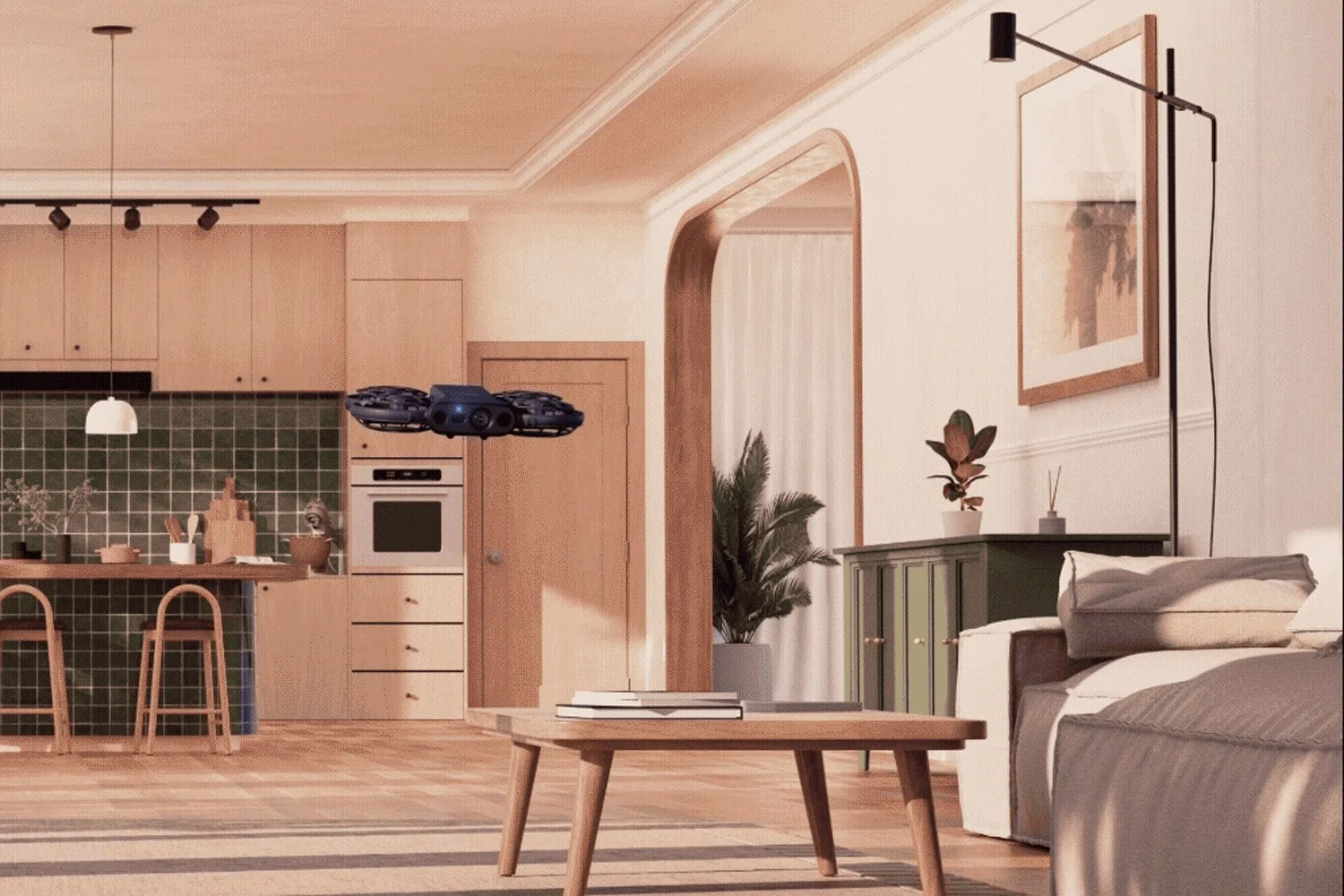
A camera that goes to the problem
Morning Brew reports that Amazon Ring has finally debuted the indoor flying security camera it first announced six years ago, alongside a rolling patrol robot for businesses. The Ring Drone Cam costs 249.99 dollars and sits in a dock out of sight with its camera off. When a Ring camera, sensor, or alarm trips, it takes flight, visits preset patrol points, and records 2K video while it turns a full circle to see the room.
The Neuron adds the operating details. Flights run about five to eight minutes on established paths, flashing LED lights warn anyone nearby that it is recording, and safeguards keep it from venturing outside, which would be illegal. You can also send it on scheduled routes, though schedules require a Ring Protect plan. It ships January 27, 2027, and it still needs FCC authorization before Amazon can sell it. Amazon also admits the propellers are not quiet.
The Rover is the same idea for a shop floor
For businesses, the Rover Cam costs 999.99 dollars, is open for preorder, and ships December 16. It rolls to saved spots across floor space of up to 5,000 square feet, performs a full circle scan at each stop, and raises a periscope mast to peek over counters and shelves. Morning Brew notes its 4K streaming camera and light beamed toward the ceiling for tracking, and The Neuron lists the working kit around it: a siren, a light tower, and two way audio.
Amazon calls it a guard who never clocks out, and Morning Brew points out the family resemblance. Rover is a revised and cheaper descendant of Astro, the Amazon security robot that flopped after its 2021 release. The difference this time is the brain. Both new machines run on Ring AI Pilot, which uses cameras and vision models to map a space into a floor plan, label the rooms, and suggest patrol points like side doors, windows, and long hallways, then steers around furniture in real time.
Why one moving camera beats ten fixed ones
The old answer to a blind spot was another camera, then another, until the walls looked like a casino. A patrol robot flips the economics. One device covers the hallway at noon, the stockroom at close, and the window that just rattled at 2 AM, and it brings the footage to you instead of asking you to scrub ten feeds. Coverage stops being a hardware count and becomes a route you design.
For event and retail operators, that route is the product to watch. A venue walkthrough after close, a periscope check over a counter, a siren and a voice from the speaker before a person ever drives over: that sequence handles most incidents without a payroll line for overnight security. The hardware is the headline, but the patrol plan is where the value lives.
The honest limits before you preorder
Hold the excitement to the facts. The home drone cannot ship until the FCC allows it, its battery buys minutes rather than hours, and a loud little aircraft will announce itself to everyone in the house, pets included. The Rover asks a business to trust a rolling camera around customers and stock, and neither device replaces a person when a real situation needs judgment on the spot.
Still, the direction is clear. Security is moving from watching to patrolling, and the map the AI builds of your space becomes the asset everything else runs on. If you own a store, a studio, or a short term rental, start by walking your own patrol route on paper. Where are the doors, the windows, and the blind corners a camera on the move would check first. When these machines arrive, the owners with that route already drawn will get value on day one.
Sources and further reading
- Morning Brew: Amazon unveils drones to look after your home (November 11, 2026)
- The Neuron: Ring Drone Cam and Rover Cam patrol robots (November 11, 2026)
Sources were checked for this article. Tool features, prices and availability can change. Product claims are attributed to their publishers.