Oakland Workers Bargained for AI Protections Before the Tools Arrived
Oakland city workers are voting on a contract that requires retraining or reassignment when AI takes over a job, plus a 9 percent raise over three years.
A contract that answers the paycheck question
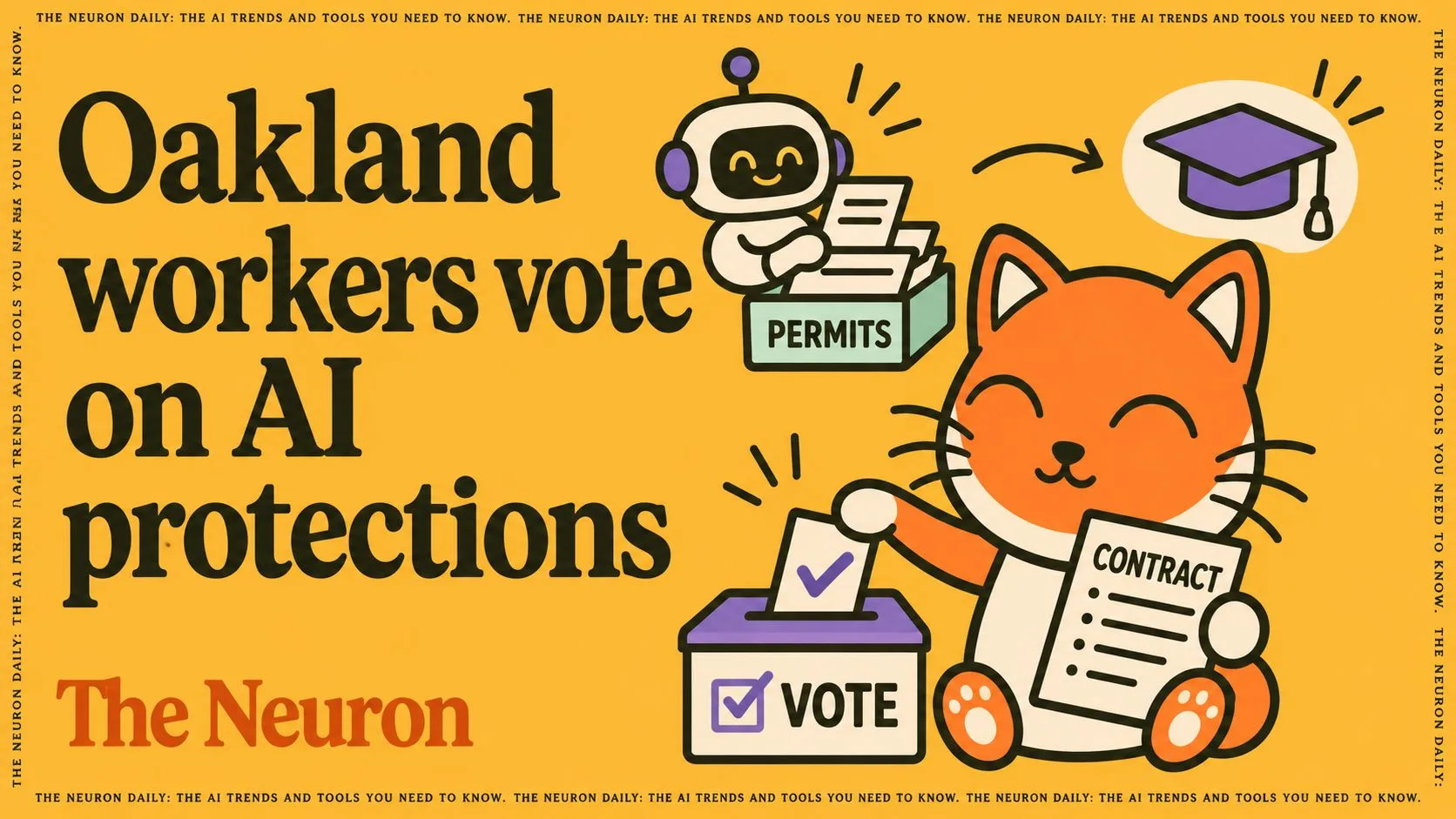
Oakland city workers are about to vote on a contract that spells out what happens if AI takes over their jobs. The Neuron reports that under the proposed deal, the city would have to retrain or reassign workers displaced by AI. The city and IFPTE Local 21 reached a tentative three year deal on October 31, the union called off its planned November 5 strike, and the package includes a 9 percent raise over three years.
The example The Neuron gives is permit processing. A new tool could cut the time that work takes, and the city could use the saved hours to clear a backlog. Or it could decide it needs fewer people doing that work. The tool saves time either way. What happens to the people is a choice, and Oakland chose to write that choice down before the software arrived, not after.
Accountability was part of the bargain
Losing jobs was only one concern. Julian Ware, who works in the city IT department, told The Neuron the union also worried that workers would be held responsible for what AI produced, especially if the tools left them with more work instead of less. Anyone who has cleaned up after a confident AI draft knows that fear is reasonable. Output that looks finished can still send the checking, fixing, and explaining back to a person.
Other public workers have won similar ground. At Berkeley Unified, the same union secured 60 days of notice before the district introduces AI, a chance to discuss the rollout, and training if the district goes ahead. That contract also bars using AI to evaluate or discipline those workers. In Columbus, Ohio, the transit agency needs union consent to put self driving vehicles into service, and the contract protects drivers and mechanics from layoffs or pay cuts caused by new technology.
The pattern reaches far beyond city hall
New York state law protects covered public workers from losing their jobs, regular hours, pay, or benefits because an employer uses AI. Pennsylvania ran a yearlong ChatGPT pilot and said it would look for ways to put the saved time back into public services, bringing union members and managers together to talk through where AI should be used. The Neuron also notes the same fight in private workplaces: Blizzard workers won the right to bargain over AI use on the job, and Hollywood producers now have to bargain with the actors union before using AI generated performers.
Read those deals together and a pattern forms. The winning language is rarely a ban on the tool. It is notice before rollout, training on the clock, a real role at the same pay, and a clear rule about who answers for AI output. Those four items protect people without pretending the technology is going away.
Settle it in your own shop before you scale the tools
Most creator businesses and small teams have no union, which makes this more important, not less. If you bring AI into editing, outreach, or admin work, say out loud what happens to the hours it saves and who owns the final call on anything it produces. Write it in one short page your team can point to. The worst version is the silent one, where everyone quietly wonders whether learning the new tool is training their replacement.
Oakland offers a useful test for whatever you adopt next. When the first job changes, is there a role that person can move into at the same pay, and do they get time during work to learn it? If you can answer yes before rollout, your team will learn faster and trust the tools more. The contract is not the opposite of innovation. In Oakland, it is what let the innovation proceed.
Sources and further reading
Sources were checked for this article. Tool features, prices and availability can change. Product claims are attributed to their publishers.