Meta Muse Spark Open Turns Two Mac Studios Into an AI Supercomputer
Meta released Muse Spark Open, an open weight model with 816 billion parameters, tuned with Apple to run locally on two Mac Studios. The Rundown covers the scores, the local demos, and the open model race.
A frontier sized model that lives on a desk
Meta has released Muse Spark Open, an open weight model with 816 billion parameters, built for coding and agent work. The Rundown reports that Meta worked with Apple so the model can run locally on Mac Studio hardware, which Meta presents as a first for a model in this size class.
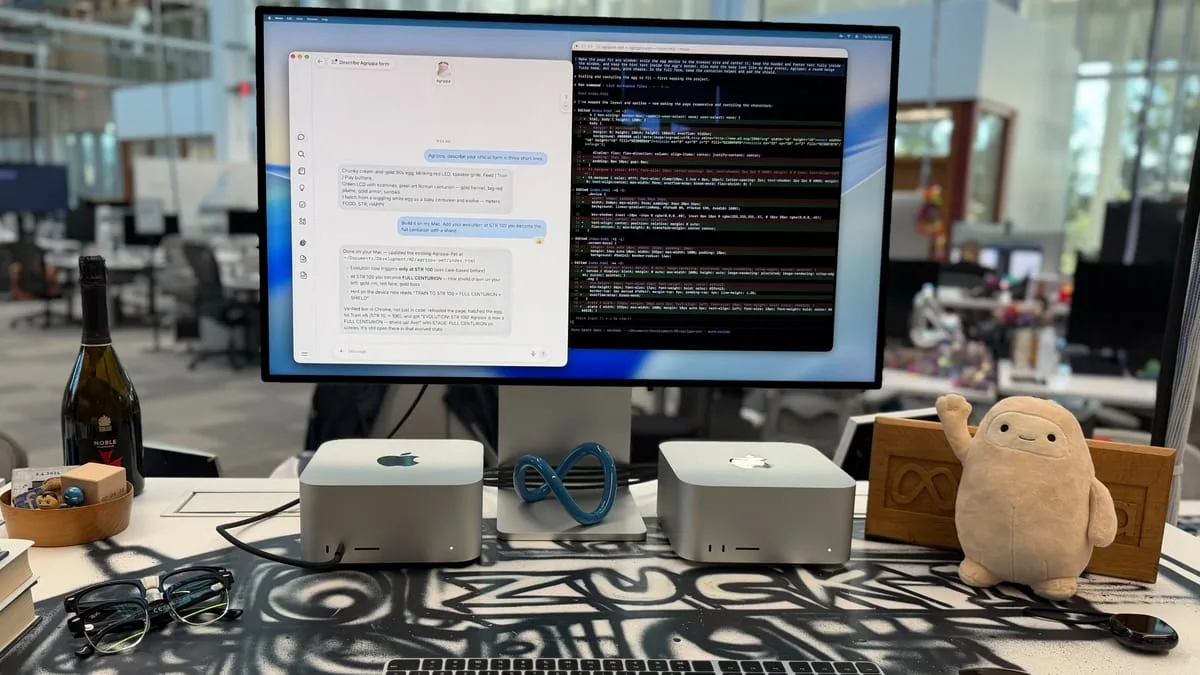
The setup in the announcement photo is striking for anyone who edits for a living. Two M5 Ultra Mac Studios, with one terabyte of combined memory, run the model through Apple updated MLX toolkit. Meta says the same setup shipped fixes for iOS apps and edited video in DaVinci Resolve with no cloud involved. The work happened on the desk, not in a data center.
Where Spark Open lands in the open race
On the Artificial Analysis Intelligence Index, Spark Open scores 39. The Rundown notes that puts it ahead of other Western open weight models, while three Chinese models sit higher, GLM 5.3 at 45, Kimi K3 at 44, and Qwen3.8 at 40.
The pattern across tasks matters as much as the headline score:
- Spark Open matches or beats open rivals on multimodal and knowledge tasks
- Chinese models still lead on coding, with Kimi, GLM, and Qwen all ahead
- It is the third major Western open launch this month, after Reflection AI Beam and Mistral Le Chonk, a one trillion parameter model whose weights arrive October 27
Meta is playing both sides again
Longtime readers will remember that Meta built its AI reputation on open Llama models, then moved toward closed releases as the frontier race heated up. This week shows both strategies at once. Muse Wonder competes at the closed frontier, while Spark Open gives developers and studios a serious model they can own, run, and inspect on their own hardware.
For video and creative work, local matters for practical reasons. Client footage, unreleased music, and private brand work carry real privacy weight. A model that can help edit, code tools, and run agents without sending that material to a cloud is a different kind of offer, even if a pair of top spec Mac Studios is not a casual purchase.
What creators should take from this launch
Watch the tools, not only the scores. When a model this size runs inside the machine on your desk, the next wave of editing assistants, coding helpers, and agent workflows can live inside the apps you already use, with your files staying home. That changes pricing, privacy, and speed all at once.
The open race is also a reminder to stay flexible. The best model for your work may change by the month, and the teams that win will be the ones who can swap models without rebuilding their whole process. Keep your footage organized, your prompts written down, and your workflow documented. Hardware is getting stronger. Direction is still the skill that decides what the hardware makes.
Sources and further reading
Sources were checked for this article. Tool features, prices and availability can change. Product claims are attributed to their publishers.