Meta New Terms Could Let It Scrape Your Business Website
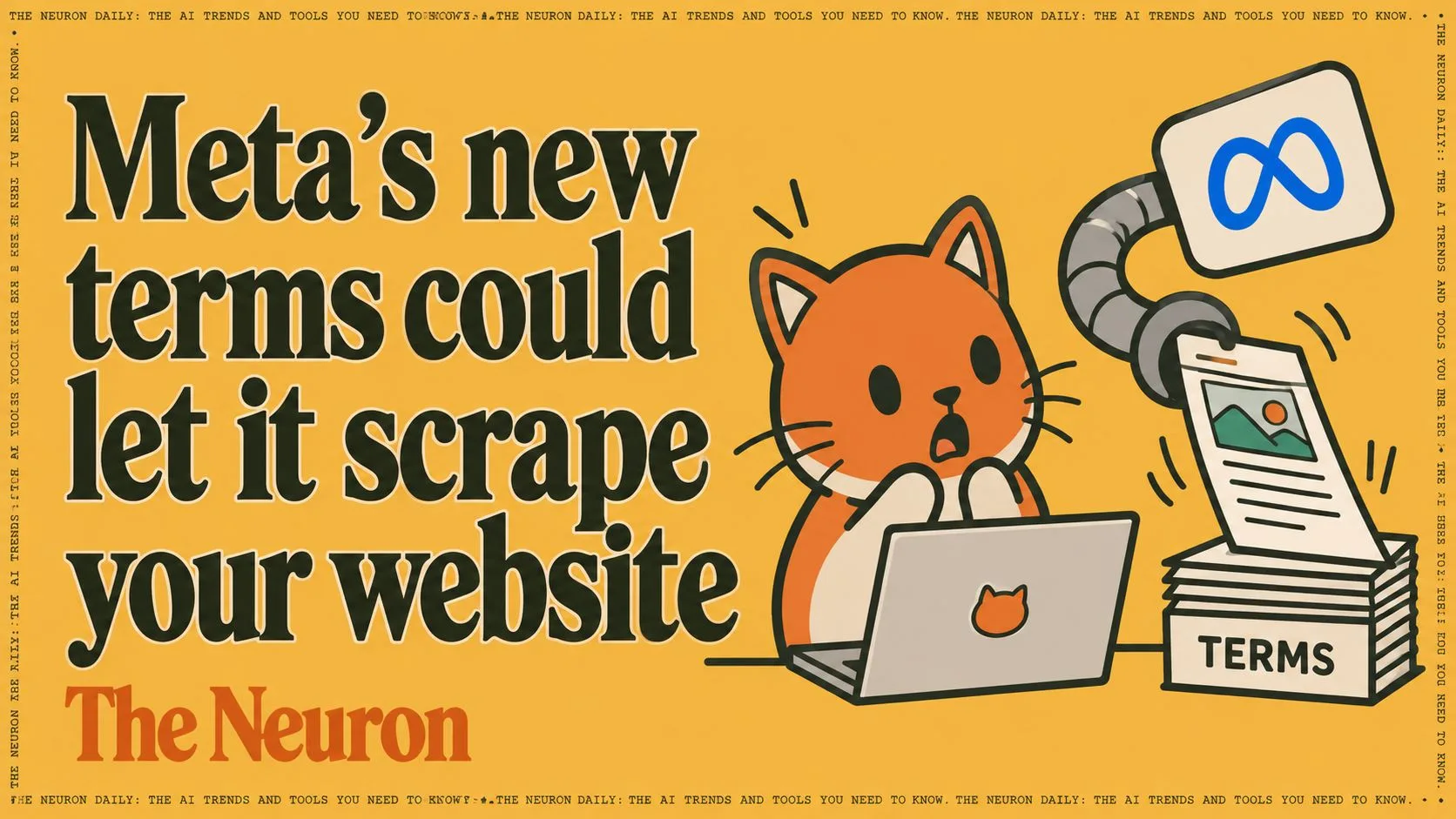
Meta business terms taking effect October 30 authorize scraping websites associated with businesses that use its products, The Neuron reports. If you share an article on Instagram, experts say Meta could collect the full article from your own site.
You use Instagram to send people to your work
Most Florida creators and event brands use Instagram the same way. You post the clip, you share the flyer, and you point people back to your own website, where your articles, prices, and booking pages live under your control. The Neuron reports that the fine print behind that routine is about to change.
Meta business terms take effect October 30 and authorize scraping websites associated with businesses using its products. Scraping here means automatically collecting content from those sites, and Meta says the purpose includes developing and training Meta products.
The reach could go beyond what you post
This is the part that should make publishers sit up. Legal experts told Nieman Lab, as reported by The Neuron, that the terms could include training Meta AI on publishers articles. Sharing an article on Instagram could authorize Meta to collect the full article from your site, under the experts reading of the terms.
In other words, the content at risk is not only the photo or caption you uploaded. It can be the page you linked to, on a website you own, written for your audience. And according to Nieman Lab, you cannot reject these terms separately and keep using Meta business products. Accepting the platform and accepting the scraping arrive as one package.
Meta says it is simpler than it sounds
Meta says the update is about ads and recommendations, simplifying existing rules for collecting product information, not claiming a new right to scrape news. That explanation may be sincere, and it is also exactly why the wording matters. A company can describe a narrow intention today while holding broad permission tomorrow.
The Neuron adds useful context: even if Meta has permission to collect content, using that content to train AI is a separate legal question about whether it has the right to learn from the work. Five major publishers sued Meta in May, alleging it pirated millions of works to train its Llama AI models. That case is separate, but it shows why a new set of terms does not end the argument over whose work AI can learn from.
What this means for your own site
None of this means you should delete Instagram tomorrow. For most event and creative businesses in Florida, Instagram is still where the audience lives, and leaving has a real cost. It does mean your website strategy should be clear eyed:
- Know that linking your site from business accounts may carry broader permission than most owners realize
- Keep your most valuable original work easy to find on your own domain, where your name and offers sit beside it
- Read the October 30 terms for your own accounts instead of relying on summaries, including this one
The bigger question underneath
AI companies are hungry for training data, and platforms control the doors most small businesses walk through to reach customers. When the door owner also wants to learn from everything you carry through it, the bargain deserves a hard look.
The practical takeaway is ownership. Build the audience where you can, but build the asset where you control it: your site, your list, and your direct relationships. Platforms can change their terms on a date they choose. The work you publish under your own name is still yours, and posts like this one will keep tracking what that protection is actually worth.
Sources and further reading
Sources were checked for this article. Tool features, prices and availability can change. Product claims are attributed to their publishers.