A Free DeepSeek Model Edged Opus 5 at Coding
DeepSeek released a downloadable model update that scored 77.0 on a coding agent test, ahead of Claude Opus 5 at 74.0, and opened web search tools priced about 85 percent below rivals. The Neuron breaks down what is real and what is marketing.
A new brain and a pair of eyes, priced like a clearance sale
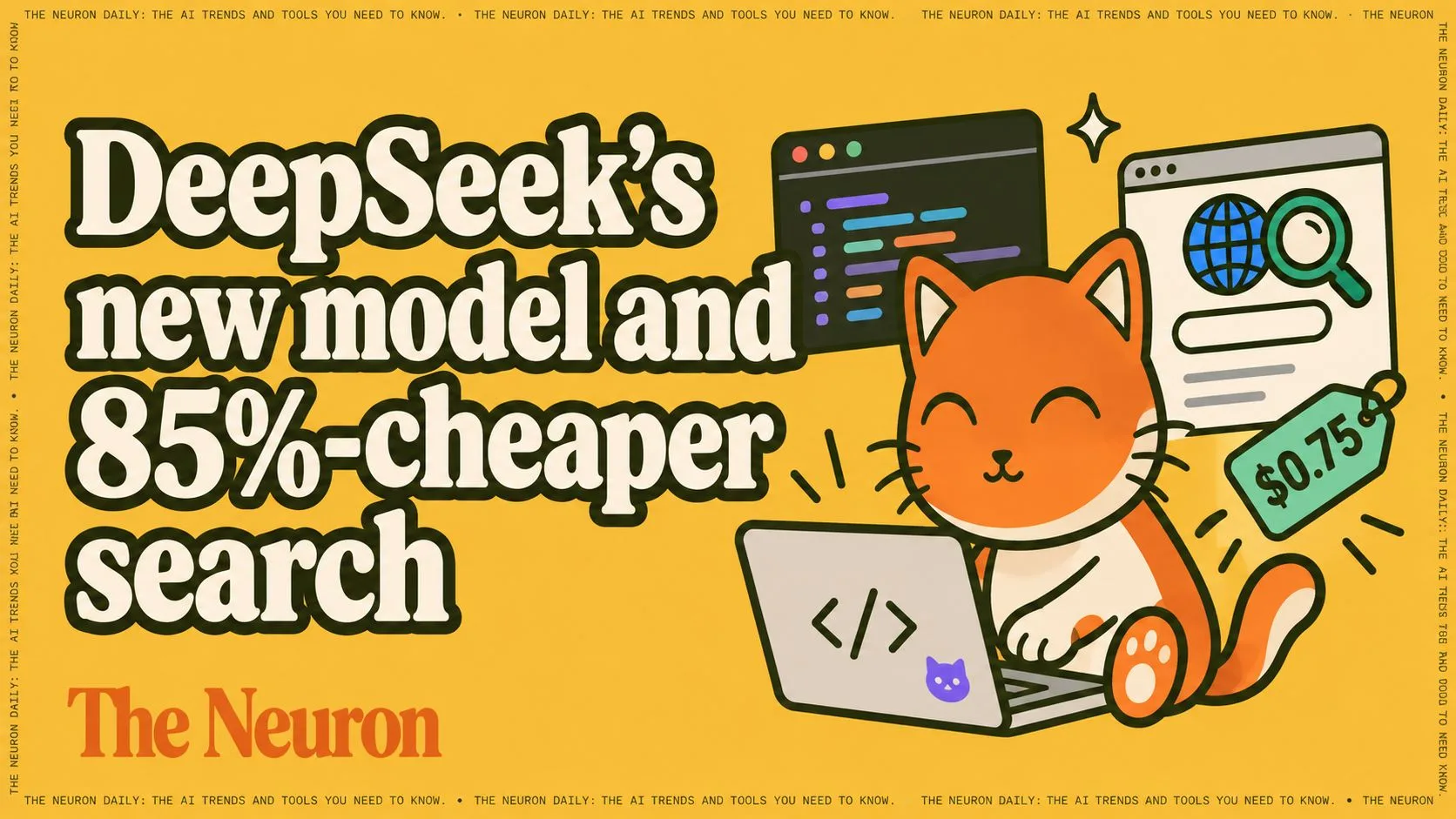
On Saturday, DeepSeek released two things at once, according to The Neuron. The first is a model update called V4.1 Flash 1017. The second is public access to its own web Search and Fetch tools for AI agents. One gives an agent a better brain. The other gives it a way to look things up.
The model update matters because of how it is distributed. The weights are free to download under an MIT license, so anyone can run the model or build a paid service on top of it. That is a very different offer from a model you can only rent from one company, one month at a time.
The coding score everyone will quote
On DeepSWE v1.1, a coding agent test, DeepSeek reports a score of 77.0, versus 74.0 for Claude Opus 5 and 73.0 for GPT 5.6 Sol. Those are the numbers that will travel, and The Neuron is careful about how far they should travel.
The fine print deserves equal billing:
- DeepSeek ran those tests itself, so independent confirmation is still pending
- Opus 5 still wins on Humanity Last Exam, 56.3 to 42.6, and on Terminal Bench 4.0, 51.8 to 42.3
- The honest reading is a great value coder, not a new smartest model overall
The price gap is the real story
DeepSeek charges 0.15 dollars per million input tokens and 0.60 dollars per million output tokens off peak. In August, Artificial Analysis found the earlier Flash model cost about 3 cents to run its whole test suite, versus 1.86 dollars for GPT 5.6 Sol and 3.15 dollars for Claude Fable 5. Three cents for work that cost dollars elsewhere changes what small teams can afford to automate.
The new Search and Fetch tools push the same point. Search returns ranked results for a query, and Fetch opens a page and returns its text in a clean format agents can read. Each costs 0.75 dollars per 1,000 successful requests, and failed or empty calls are free. One pricing roundup cited by The Neuron lists rivals at 5 dollars per 1,000 and up, which is where the roughly 85 percent gap in the headline comes from.
Why open weights squeeze everyone else
The Neuron argues that open weights cap prices across the market, because any cloud provider can host the model, and OpenRouter already lists about a dozen hosts for it. The top closed models still look safe on the hardest reasoning work, so the squeeze lands first on bulk work like routine coding and long agent loops, exactly the work that burns the most tokens.
There is also a geopolitics layer creators should at least know exists. United States agencies have accused DeepSeek of training on other models outputs at industrial scale, Beijing has pushed back, and China has proposed export controls on very large AI models. DeepSeek shipped this release on the safe side of that proposed line: open weights for a mid size model, and a paid API for the rest.
What a Florida creator should do with this
Treat this as a budget tool, not a belief system. Public web research, first pass coding help, and bulk sorting are reasonable jobs for a cheap open model. Keep confidential client material out of it, since Search and Fetch run on DeepSeek servers and several governments restrict DeepSeek on official devices over data security.
Watch two things The Neuron flags: November 1, when the free window for calls through tools like Claude Code and Codex ends and real bills begin, and whether anyone independent can reproduce that 77.0 coding score. If both land well, the price of getting AI help just dropped again, and small studios that move early will feel it first.
See creative direction pricing
Sources and further reading
Sources were checked for this article. Tool features, prices and availability can change. Product claims are attributed to their publishers.