Her Laundry Side Hustle Now Brings In 8.6 Million a Year
The Hustle Blower's October 12 story follows Susan Toft, whose Gold Coast laundry service grew from her own home into a contractor network bringing in 8.6 million Australian dollars a year.
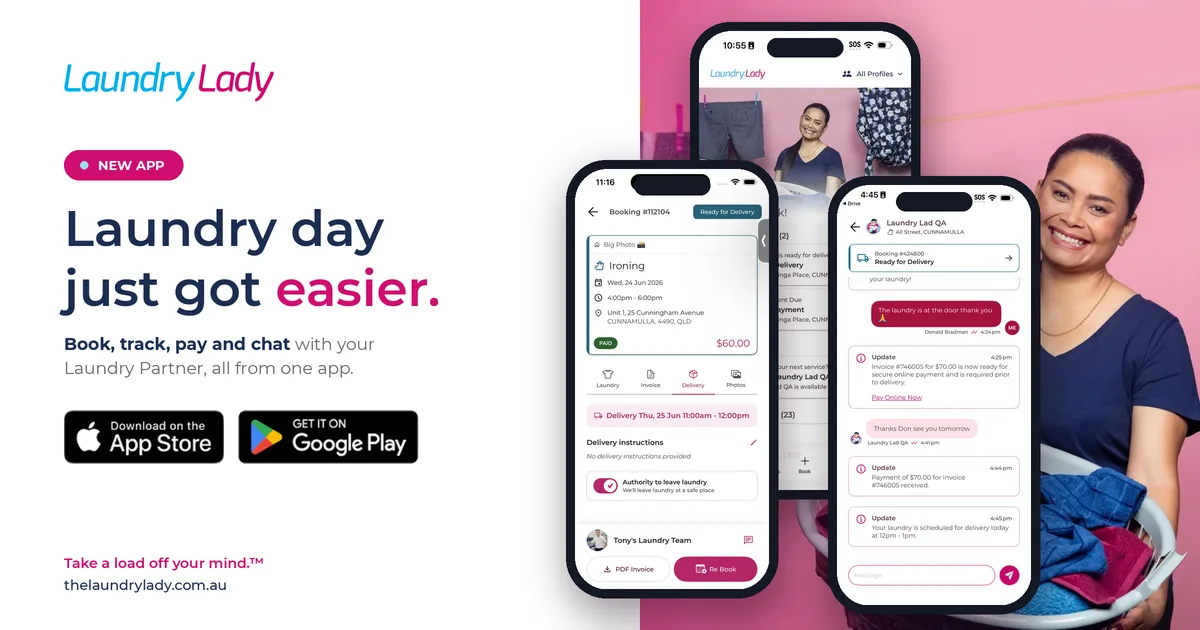
The machines were already in people's homes
Susan Toft started The Laundry Lady on Australia's Gold Coast in 2012 with a washing machine, a vehicle, and a household problem that keeps coming back. By the financial year reported in August 2025, the business was bringing in 8.6 million Australian dollars in annual revenue. It is now a network of contractors who collect laundry, wash it in their own homes, and deliver it back, usually the next day.
Susan began as both sides of the market at once: a working mother who wanted help with the pile and work that fit around her child. At first she collected and washed everything herself, which is the honest version of most big revenue headlines.
People pay to delete a sequence, not a chore
The obvious objection is that every customer already owns a washing machine. Owning the equipment is not the same as wanting the job. Laundry hides its labor in the interruptions: sort it, start it, remember it, move it, dry it, fold it, put it away, then find another basket. The Laundry Lady sells the whole sequence disappearing. A bag leaves, and a finished chore comes back.
The same opening appeared in small businesses. Salons and hairdressers generate towels, gowns, and uniforms every day, too much to enjoy washing and too little to justify an industrial laundry contract. Serving that awkward middle size, with collection times arranged around the working day, became a second market.
Pricing that protects the trip
The price list shows the operating discipline underneath the friendly brand:
- A standard five kilogram wash, dry, and fold load is listed at 30.25 Australian dollars
- Pickup and delivery adds 14.50 Australian dollars
- A 70 dollar minimum per service protects the two journeys every order requires
- More than 80 percent of customers book weekly or fortnightly, and 95 percent have used the service more than once
Growth meant handing the work to other people's homes
Susan's constraint was never demand. It was her own hours. Contractors arrived through personal connections and Gumtree ads, a 5,000 dollar grant in 2016 funded online booking and the first group of partners, and the company later built its own platform, TimeBoss, after years on an adapted off the shelf system.
Television helped both sides of the marketplace. After Susan appeared on Shark Tank Australia in 2023 and received a one million dollar investment offer, contractor applications rose about fivefold. She is equally open that cash flow stayed hard while revenue climbed. A recurring booking is worth more than a follower count, and a network built on other people's spare rooms can grow without a warehouse, as long as the promise survives every handoff.
Sources and further reading
Sources were checked for this article. Tool features, prices and availability can change. Product claims are attributed to their publishers.