
Kimi K3.1 Pro Puts a Chinese Open Model at Number Four on the Frontier Leaderboard
Moonshot says its new Kimi K3.1 Pro matches the strongest proprietary models on key benchmarks. Artificial Analysis ranks it fourth overall, and its downloadable weights are due by November 4.
An upgrade that arrived near the top
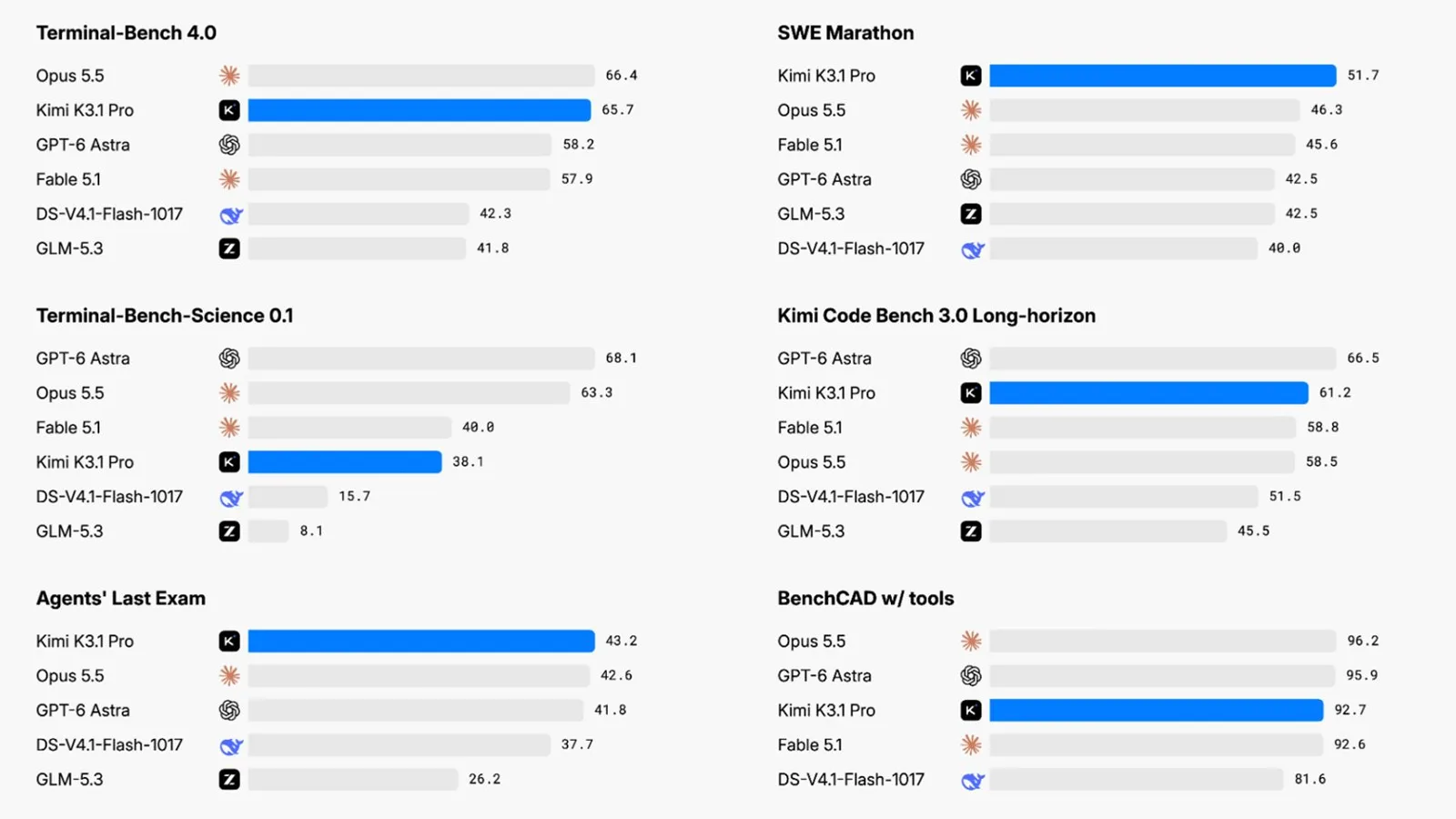
Chinese AI lab Moonshot just introduced Kimi K3.1 Pro, an upgrade to its July K3 model that the company says is matching the strongest proprietary models on key benchmarks. Free to download weights are set to come by November 4, according to The Rundown AI.
Artificial Analysis placed the model at number four overall on its Intelligence Index, beating the GPT 6 Astra model from OpenAI and trailing only the 5.5 duo from Anthropic and Muse Wonder from Meta. A lab outside the usual United States circle is no longer knocking on the frontier door. It is seated at the table.
Where Moonshot says it wins
In Moonshot testing, K3.1 Pro tops Opus 5.5 on hours long coding projects, expert academic questions, document heavy research, and real world job tasks. Those are vendor run tests, so they deserve the usual caution, but the categories matter. They are the long, messy jobs that creators and small teams actually hand to an assistant.
The Neuron added a small visual test of its own. Given the same sandworm prompt, Kimi K3.1 Pro covered every ring in panels, while GPT 6 Astra stacked grey tubes. One prompt is not a benchmark, as The Neuron itself notes, but it is the kind of side by side check any user can run before switching tools.
Cheaper per token, hungrier per job
At 2 dollars in and 10 dollars out per million tokens, K3.1 Pro is priced like Sonnet 5.5 and at about a fifth of the Astra rate. The catch sits in the fine print of usage: the model consumes tokens at a higher rate than its frontier rivals.
That gap is the lesson hiding in every AI price chart. The rate per token is not your bill. Your bill is the rate multiplied by how much the model reads, writes, and retries on your actual work. A cheaper model that takes three passes can cost more than a pricier model that lands the answer in one.
The defense ranking raises the stakes
Artificial Analysis also ranks K3.1 Pro as the best openly available cyber defense model, scoring 64 percent with no safety refusals and trailing just a GPT 6 variant available only to vetted defenders. United States labs have kept their best security models locked down, so an open model this close to the top changes the planning for everyone.
The Rundown AI notes that Dario Amodei gave defenders 6 to 12 months in May before Chinese models catch up. On this evidence the defense side is already near the top, and the attack skills of open models are likely not far behind.
How a small team should test it
Open weights due November 4 mean the model can be run, priced, and compared on your own terms instead of only through a press release. If you build with AI every week, a short honest test beats a month of leaderboard watching:
- Run the same three real jobs you already pay for, and record quality and total tokens used
- Compare the full cost per finished job, not the price per million tokens
- Check the outputs you would publish, especially facts, names, and numbers
- Keep your current tool as the control until the new model wins on your work, not on a chart
Competition is doing its job
A strong open model at a fifth of a rival rate pressures every lab to cut prices, publish better numbers, or both. For creators and founders, that pressure is the product. You do not need to pick a permanent winner. You need a habit of testing new arrivals on real work while the frontier keeps moving.
Sources and further reading
- The Rundown AI: Chinas Kimi continues to challenge the frontier (October 26, 2026)
- The Neuron: Anthropic unexpected paywall breach, with Kimi K3.1 Pro in Around the Horn (October 26, 2026)
Sources were checked for this article. Tool features, prices and availability can change. Product claims are attributed to their publishers.