Disney Is Building Its Own AI Image Models and the Study Material Is Disney
Adobe and Disney announced a multi year alliance at Adobe MAX to build custom Firefly Foundry models trained on Disney characters, settings, and visual styles.
The biggest studio in the world is not renting a general model
The Neuron opens its November 10 issue with a move that should get the attention of every creator. Adobe announced a multi year alliance with The Walt Disney Company at Adobe MAX, its creativity conference in Miami Beach, and the centerpiece is custom image generators trained on Disney own characters, settings, and styles. General models learn from a huge slice of the internet. These models learn from Disney itself.
Adobe is now an official AI innovation partner of Disney, with early access to Firefly, Firefly Foundry, Premiere, and Photoshop, plus dedicated engineering and research support. The companies did not disclose financial terms, and neither did they treat this as a small software purchase. This is a creative foundation, built to sit inside the production pipeline for years.
Imagineering is already using it on real park work
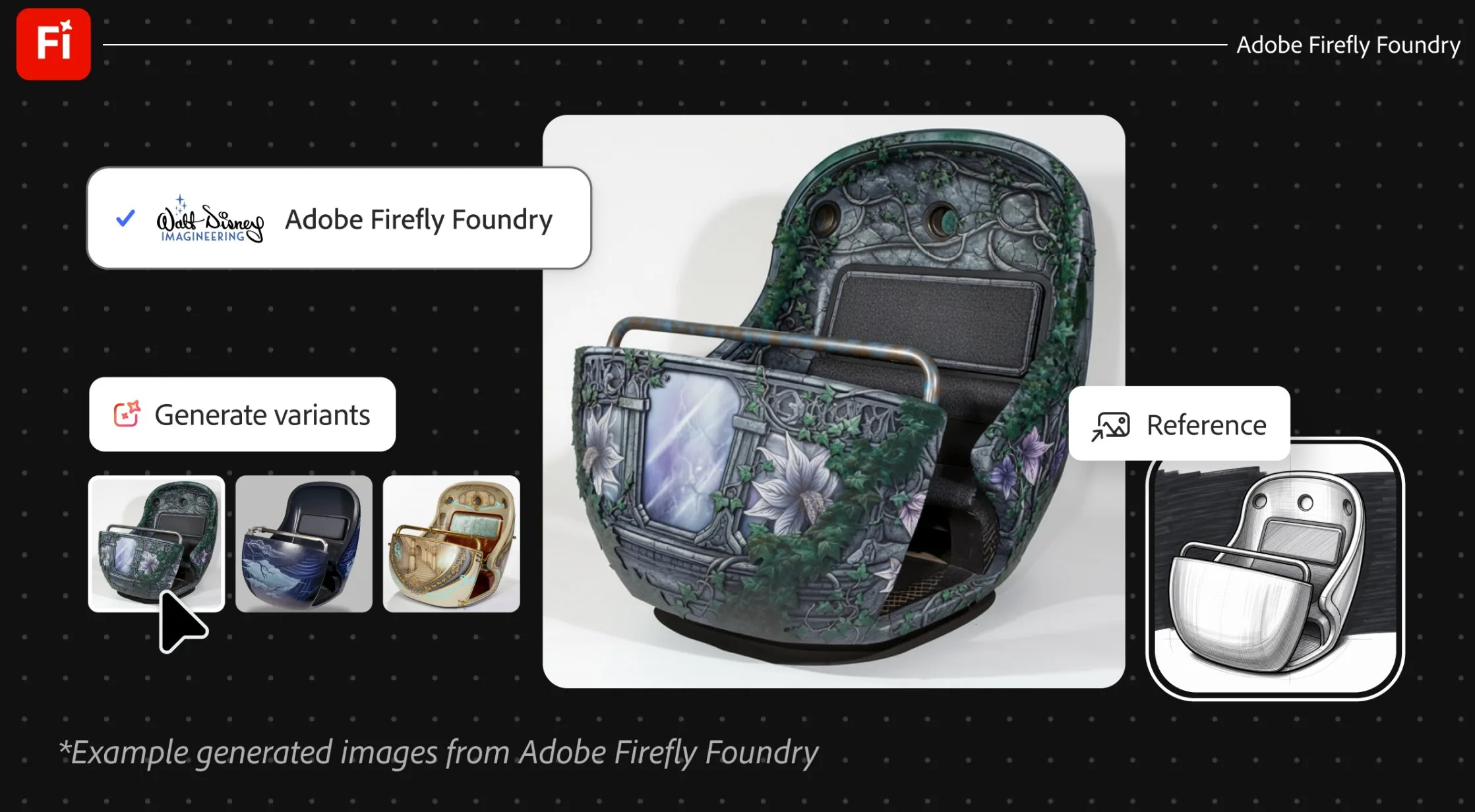
This is not a press release about a future experiment. Walt Disney Imagineering Research and Development already runs a model that turns hand drawn sketches into fully rendered concept art, and another that produces franchise accurate assets on brand. The June Adobe announcement adds a third path, taking 2D renderings into detailed 3D prototypes that help teams plan builds and estimate materials before ground breaks.
Disney plans to use the tools across its parks, cruise ships, production, marketing, and ESPN archives, with collaboration through StudioLAB at the studios and the ESPN Edge innovation center. A sketch on a napkin can now move toward a testable concept while the idea is still warm, and an archive built over a century becomes working material instead of storage.
Why a custom model beats a clever prompt
A general model can imitate a style for a social post. It cannot guarantee that a character looks exactly right, that a color palette matches the franchise, or that the output is safe to use in commercial work. Disney is paying to remove that uncertainty. The model is tuned on licensed and proprietary assets, described by both companies as human centered and artist led, so the output starts inside the brand instead of wandering toward it.
That distinction matters far beyond theme parks. Any serious creative business has the same problem at a smaller scale: a look, a voice, and a library of past work that generic tools keep flattening into average. The advantage is not access to AI. Everyone has that now. The advantage is an AI that has studied your catalog, your rules, and your taste, and produces a first draft that already sounds like you.
What a small studio should copy from Disney
You do not need a Disney sized deal to use this play. Start by treating your own archive as training material in the practical sense: your best edits, your approved color grades, your caption voice, your client winning frames, organized where you and your tools can actually find them. A tidy library of your strongest work is the small studio version of a proprietary model, because it sets the standard every new job gets measured against.
Then watch what other studios do next. The Neuron closes with the right question: whether rivals build their own models instead of renting general purpose ones. Expect clients to start asking the same thing of you. The winning answer will not be that you use AI. It will be that your AI, your process, and your taste are trained on a body of work nobody else can rent.
Sources and further reading
- The Neuron: Disney is building its own AI image models (November 10, 2026)
- Business Wire: Adobe and The Walt Disney Company announce multi year strategic alliance (November 9, 2026)
- Adobe News: Disney Imagineering brings Firefly Foundry to the theme park design toolkit (June 16, 2026)
Sources were checked for this article. Tool features, prices and availability can change. Product claims are attributed to their publishers.