Claude Now Joins Your Meetings and Builds the Spreadsheet While You Talk
Anthropic rolled out Claude Meetings, Sheets, and Whiteboards in one launch, with Claude Data generally available and work apps opening inside Claude itself.
One launch, four pieces of the workday
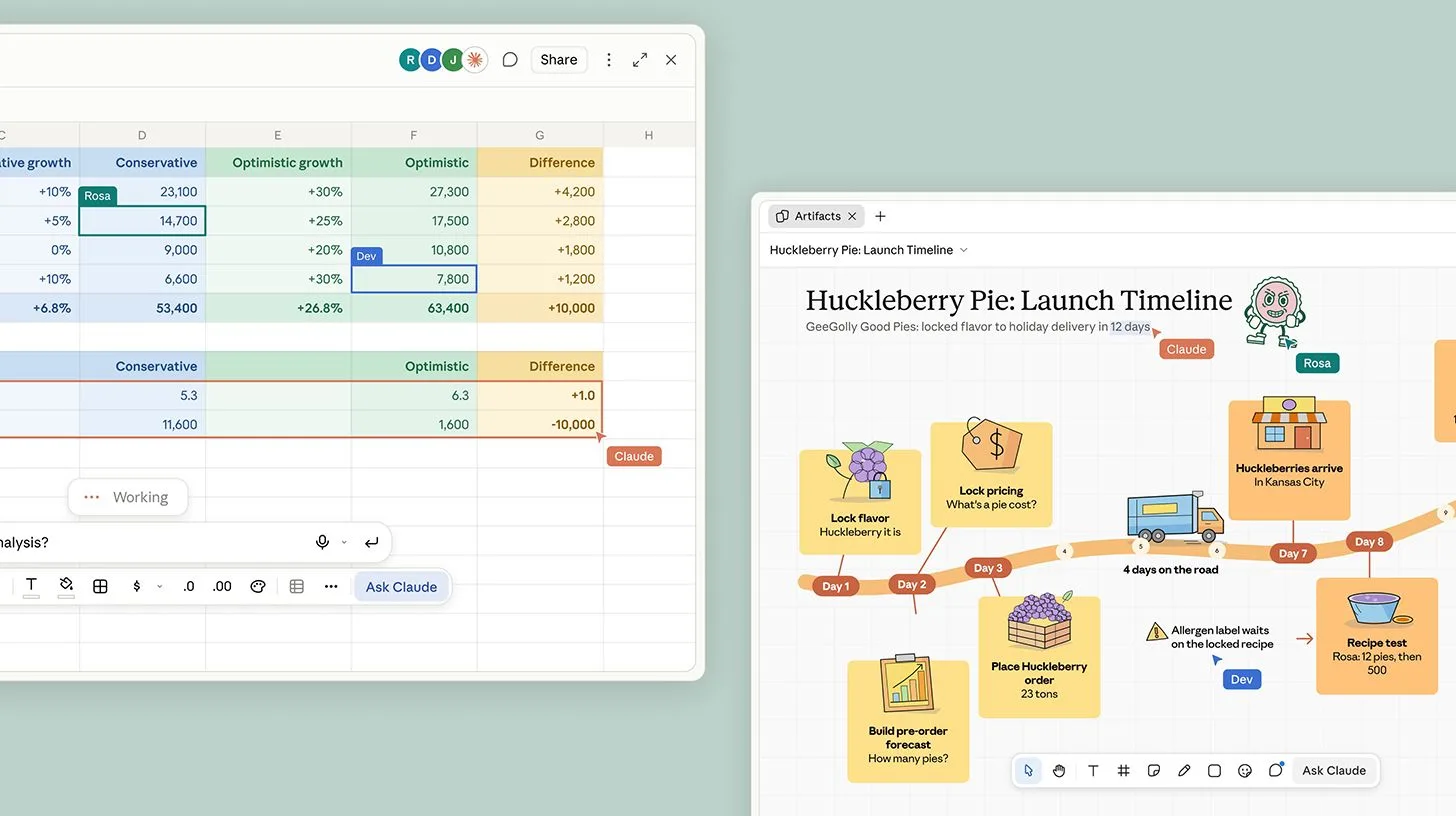
The Neuron reports that Anthropic chose November 11 to ship a stack of office tools at once. Claude Meetings joins a Google Meet call as a visible participant, drafts the plan while people talk, and saves notes and action items afterward. Claude Sheets builds a working spreadsheet with formulas from a prompt and exports it to Excel. Claude Whiteboards maps a plan onto a shared board a team can edit together. Claude Data, the analytics tool that entered beta as Dashboards in October, is now generally available.
The Rundown AI adds the detail that makes this feel inevitable. Product lead Nicholas Lin said Claude joins nearly every Anthropic meeting after months of internal testing, and the Google Meet beta is coming to Team and Enterprise users. Claude will not join calls with outside guests unless an admin approves, and it leaves if one shows up. The guardrails ship with the feature, not after it.
The assistant is becoming the office
Step back and the pattern is hard to miss. Claude already had documents, slides, and design tools. Now it has spreadsheets, boards, dashboards, and a seat in the meeting. The apps it has not rebuilt are being pulled inside anyway: upgraded connectors now open tools like Adobe and Atlassian fully within Claude, so the work happens in the assistant instead of across a dozen tabs.
The Neuron frames the shift plainly. The biggest change for most people is not a smarter model. It is where the upgrades show up. Work is moving toward AI drafting first and humans reviewing, whether that draft is a meeting plan written live, a narrated video built from company metrics, or a timeline a whole team edits on one board.
What changes for a small team
Meetings are where small teams quietly lose their week. Someone talks, someone half listens, and the decisions scatter into memory. A participant that drafts the plan in real time and files the action items changes the meeting from a conversation into a work product. The person running the call still owns the call. The follow through, which is where projects usually die, gets written down by default.
Sheets and Whiteboards attack a different leak. Most small operators do not need a bigger spreadsheet program. They need the budget tracker, the launch timeline, and the client report to exist at all, without an afternoon lost to formulas and formatting. A prompt that returns a working file you can export and edit is not a novelty. It is the difference between a plan on paper and a plan that stayed in someones head.
Try one chore before you rebuild anything
The Neuron gives the right starter advice: pick one chore this week. A budget tracker in Sheets, a project timeline on a Whiteboard, or one internal meeting with Claude taking notes. The tools need a paid plan, and the meeting feature starts with Team and Enterprise accounts, so check your tier before you promise your crew a new workflow.
Keep the human rules visible while you test. Claude Meetings announces itself, and that transparency is the standard to copy in your own business: clients and guests should always know when an AI is in the room, what it captured, and who signs off on the result. The teams that win with these tools will not be the ones that automate the most. They will be the ones whose review step stays sharp.
Sources and further reading
- The Neuron: Will Claude join your meeting (November 11, 2026)
- The Rundown AI: Anthropic stretches Claude across the office (November 11, 2026)
Sources were checked for this article. Tool features, prices and availability can change. Product claims are attributed to their publishers.