This AI Factory Builds Tiny Machines Straight From Code
Jeff Holden helped create Amazon Prime and ran Uber's self driving program. His new company, Atomic Machines, just came out of six years of stealth with 250 million dollars and an AI guided factory that builds tiny working machines straight from a digital design. The Rundown AI called it prompt to product manufacturing, and the first product is already aimed at AI data centers.
Six years quiet, then a factory that prints machines
Atomic Machines, a California startup led by former Uber self driving chief Jeff Holden, has emerged from stealth after six years with 250 million dollars raised, according to The Rundown AI. Holden is not a first timer borrowing credibility. He helped create Amazon Prime before running one of the most watched autonomy programs in the world. His new claim is bigger than both: an AI guided factory that turns digital designs into tiny, working machines, on the way to what he calls universal command of matter.
The comparison he draws is with the 3D printer, and he draws it sharply. A printer alters the shape of an object. When the code changes in his system, the factory builds a whole new device, without retooling the line. He calls the system a Matter Compiler, software language for a machine shop: describe the device, compile it into matter.
How the Matter Compiler works
The Rundown's details describe a loop, not a printer: design, build, verify, learn, repeat.
- The factory checks every production step before a part moves on, instead of inspecting finished devices at the end
- Each run feeds the AI fresh data on which materials actually work, so the system learns manufacturing, not just the design
- The focus is moving parts too small to see without a microscope: tiny pumps, motors, and gears that chip factories cannot produce
- For now the company builds only its own products, with humans in the loop
- The long term idea is that virtually anyone with a concept could turn it into a real device
The first product is aimed at AI itself
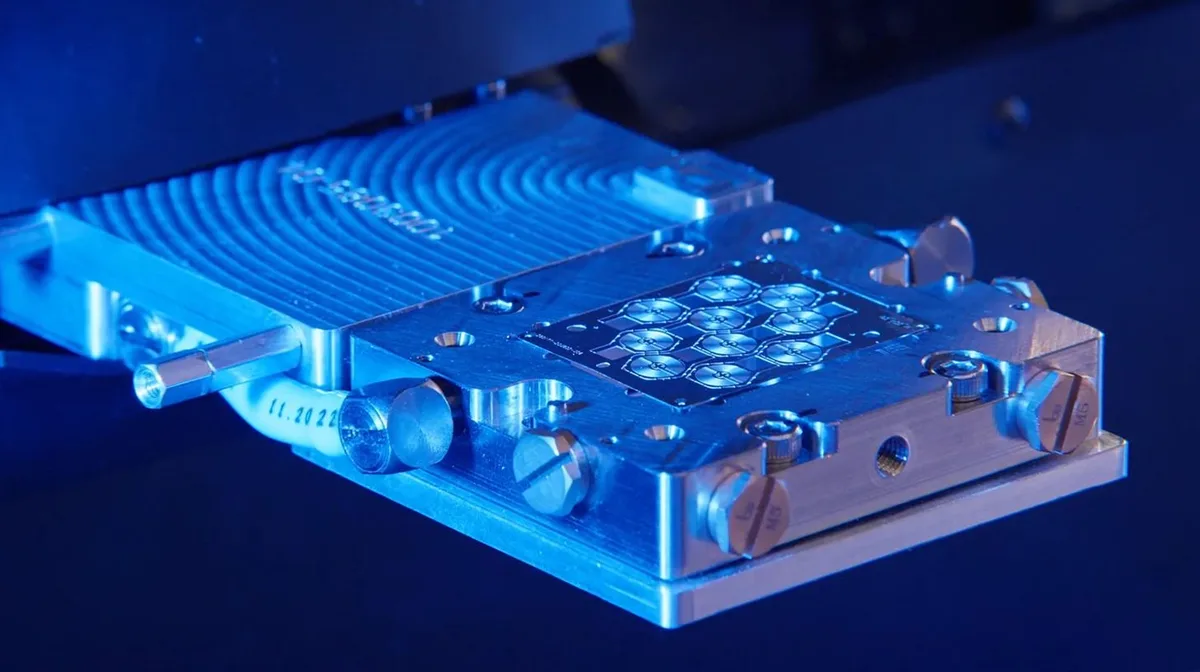
Atomic's first machine is called PrimeSwitch, a fingertip sized power switch built for AI server farms. The company says it is faster than traditional breakers and more efficient than silicon. There is a pleasing recursion in that: the infrastructure of the AI boom needs better tiny hardware, and an AI guided factory is now making it.
It is also a smart first market. Data centers buy performance by the rack and feel every inefficiency as a power bill. A small switch that is measurably faster and leaner does not need a manifesto to sell. It needs a spec sheet and a purchase order.
Vibe coding grows a body
The Rundown framed the story with the phrase that explains why it leads the issue: prompt to product manufacturing. Software already went through this door. Describe an app in plain words and receive working code. Atomic is betting hardware follows, that the distance between an idea and a physical device collapses the same way, one verified step at a time.
The honest caveat sits in the company's own plan: humans stay in the loop, and the factory makes Atomic's products, not yours. The anyone with a concept future is a direction, not a storefront. But every platform shift starts as one company's internal advantage, and 250 million dollars says serious people think this one escapes the building.
See the films and ads we produce
Sources and further reading
Sources were checked for this article. Tool features, prices and availability can change. Product claims are attributed to their publishers.