
AlphaGenome 2 Asks Which Cell a DNA Typo Hurts, Not Just Whether It Hurts
Google DeepMind AlphaGenome 2 predicts what a single DNA change does inside each cell type, trained on more than 100 million cell profiles across 68 tissues.
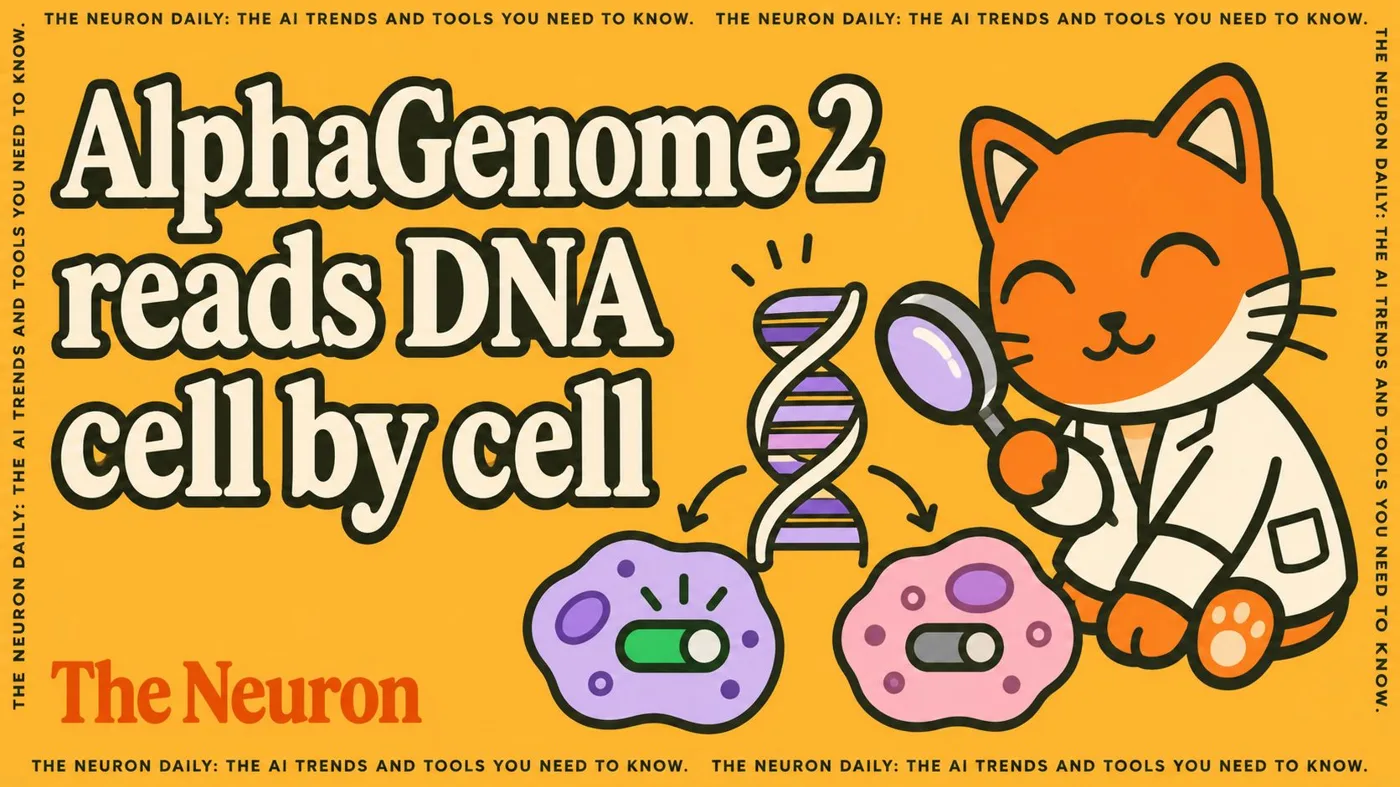
Same DNA, very different outcomes
Every cell in your body carries the same DNA, yet a single letter change can cause disease in one kind of cell and do nothing at all in another. The Neuron reports that Google DeepMind has released AlphaGenome 2, an AI model built to predict which cells a given DNA change actually affects. The Rundown AI carried the same release in its November 12 issue, calling it a more detailed view that could help trace diseases back to the cell types involved.
The setup matters. DNA holds genes, but it also holds regulatory switches, stretches that tell a cell how loudly to read a gene. Different cell types flip different switches. A typo in one switch can leave a gut immune cell and a brain cell with very different volume settings on the very same gene, which is why whole body answers were never enough.
Tasting each fruit instead of the whole smoothie
Earlier approaches mostly looked at whole tissues, which blurs everything together. The Neuron uses a kitchen comparison: it is like trying to figure out which fruit made your smoothie sour by tasting the whole smoothie. AlphaGenome 2 tastes each fruit. You hand it a stretch of DNA one million letters long plus one condition, meaning a tissue, a cell type, or a cell state, and it predicts what that cell does with that DNA.
The scale behind it is serious. The model learned from more than 100 million individual cell profiles across 68 tissues from humans and mice, and scientists can even build a condition from their own single cell experiment. DeepMind also precomputed predictions for variants linked to traits across hundreds of conditions, covering traits from height to type 2 diabetes, so researchers do not have to run the model themselves for those.
What DeepMind says the numbers show
DeepMind reports that the model found nearly twice as many gene changing variants in cells as the previous best model. On 28 immune cell types it scored 30 percent against 16 percent for causal variants, and 43 percent against 23 percent for effect direction. It reproduced a published gut disease finding on a computer, tying a far away switch to the ETS2 gene in gut macrophages, and it adapted to new cell states from a few dozen cells with no retraining.
Read those numbers with the right label on them. They come from DeepMind own evaluation, and the model is for research only. It is not validated for clinical or diagnostic use, and it will not be reading your genetic test results any time soon. The honest headline is a better research instrument, not a medical product.
Why a better question beats a bigger answer
The shift worth remembering is the question itself. Instead of asking whether a typo is bad, scientists can now ask who it is bad for. That matters because drug development mostly fails, with only about 10 percent of programs that reach human trials winning approval, while targets backed by human genetics have been found to be far more likely to succeed. A genetic hit rarely says which cell is involved, and picking the right target earlier is where years and fortunes are saved or lost.
For creators and founders watching from outside medicine, the lesson travels well. Precision about where a problem lives beats a louder general answer every time. Whether the work is a drug target, a client campaign, or a video that is not converting, the winning move is to name the exact cell, the exact audience, the exact scene where the effect happens, then aim the next test there. AlphaGenome 2 is available now for non commercial research through the AlphaGenome API, with a private preview for commercial research. The results that count next will come from outside labs testing cells the model never saw.
Sources and further reading
- The Neuron: DeepMind AlphaGenome 2 predicts DNA typo effects by cell type (November 12, 2026)
- The Rundown AI: Google new AlphaGenome traces disease to cells (November 12, 2026)
Sources were checked for this article. Tool features, prices and availability can change. Product claims are attributed to their publishers.