An AI Just Proved a Quantum Puzzle That Sat Unsolved Since 2008
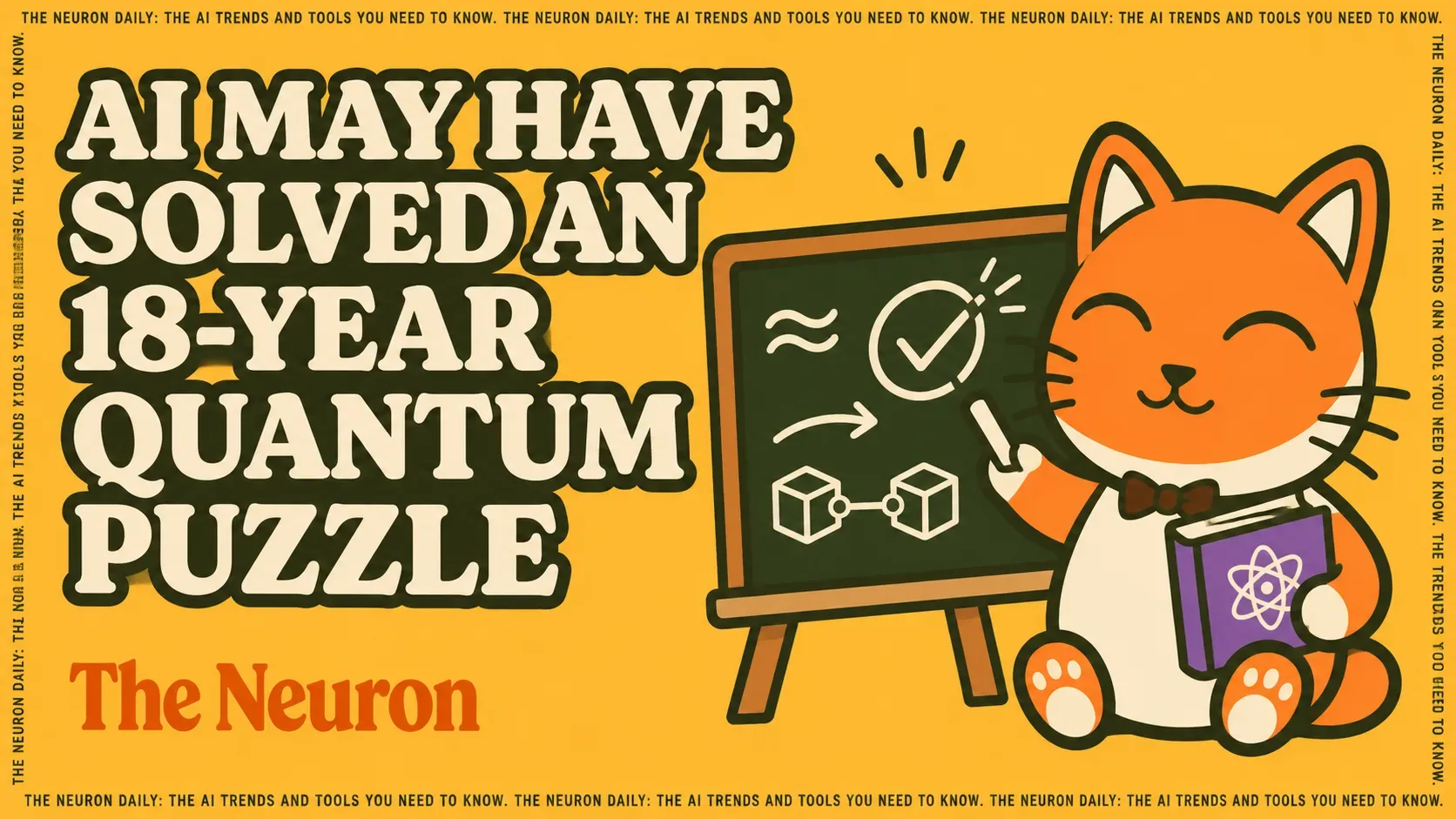
A startup says an unreleased Anthropic model produced a full proof of the Aaronson Ambainis conjecture in three days, and a logic checker verified every step.
A proof in three days, after 18 years of stuck
The Neuron reports that a startup called Physical Superintelligence, or PSI, says its research system solved a math puzzle experts have worked on since 2008. The system runs copies of an unreleased Anthropic model that the public cannot use yet. PSI says it had a full proof by day three of the run, then improved the result twice more after that first success.
The puzzle is the Aaronson Ambainis conjecture, and the question under the name is simple. Quantum computers are supposed to be wildly faster than regular ones, but faster at what, exactly? The conjecture says that when an answer truly depends on hidden inputs, at least one input matters a lot. Find that one big lever first, and a regular computer can often keep up without an impossible amount of extra checking.
The receipt is a checker that cannot be charmed
How the proof was verified matters as much as the proof itself. PSI used a tool called Lean, which works like spellcheck for logic. Write the proof in a strict format, and Lean confirms every step or rejects it. It does not care whether a human or an AI wrote the lines, and a confident tone earns no points. PSI also published the puzzle statement in Lean, so outsiders can check that the wording itself matches the original problem.
The human role is still clear. David Turturean set up the system, picked the problem, ran it, and prompted the model to write the paper, and he is the one responsible if the result is wrong. Four Stanford researchers who solved a smaller version in August read the full proof, sent comments, and called it a major result, though The Neuron notes they are thanked in the paper, so their praise comes from inside the circle rather than from the whole field.
What the result does not prove
The Neuron is careful with the limits, and readers should be too. The proof counts peeks at the data, not total computing time, so a regular computer could still take ages. It works for most inputs, not every single one, and a bit more work can still be a huge number in practice. Nothing here touches structured problems like the encryption breaking math behind Shor algorithm, which relies on exactly the hidden structure this puzzle lacks.
So this is not the end of the quantum story. It is a reality check on quantum hype, and a sharper question for anyone being sold a quantum timeline: does your problem have hidden structure to exploit, or is it just messy data? On messy data, this proof says the regular machine is harder to beat than the sales deck suggests.
Why creators should care about a math proof
Strip away the physics and the pattern is pure creative business. The winning move was not a bigger claim. It was a checkable result, produced by a system, verified by a tool that anyone can run, with a named human accountable for the outcome. That is the trust stack clients are starting to expect from AI assisted work in every field, including media.
Build your own version of Lean. Keep the source files, the brief, and the delivery checklist where a client can see how a result was produced, and let your name stand behind the final call. AI will keep producing results that sound impressive. The operators who win will be the ones whose results survive checking, because in a world of confident machines, proof is the premium product.
Sources and further reading
Sources were checked for this article. Tool features, prices and availability can change. Product claims are attributed to their publishers.