SpaceX Caught a Falling Starship With the Launch Tower
SpaceX caught the upper stage of Starship with two robotic arms on the launch tower after it deployed 26 Starlink satellites. The booster catch failed, and still the day counted.
A 171 foot spacecraft, caught in midair
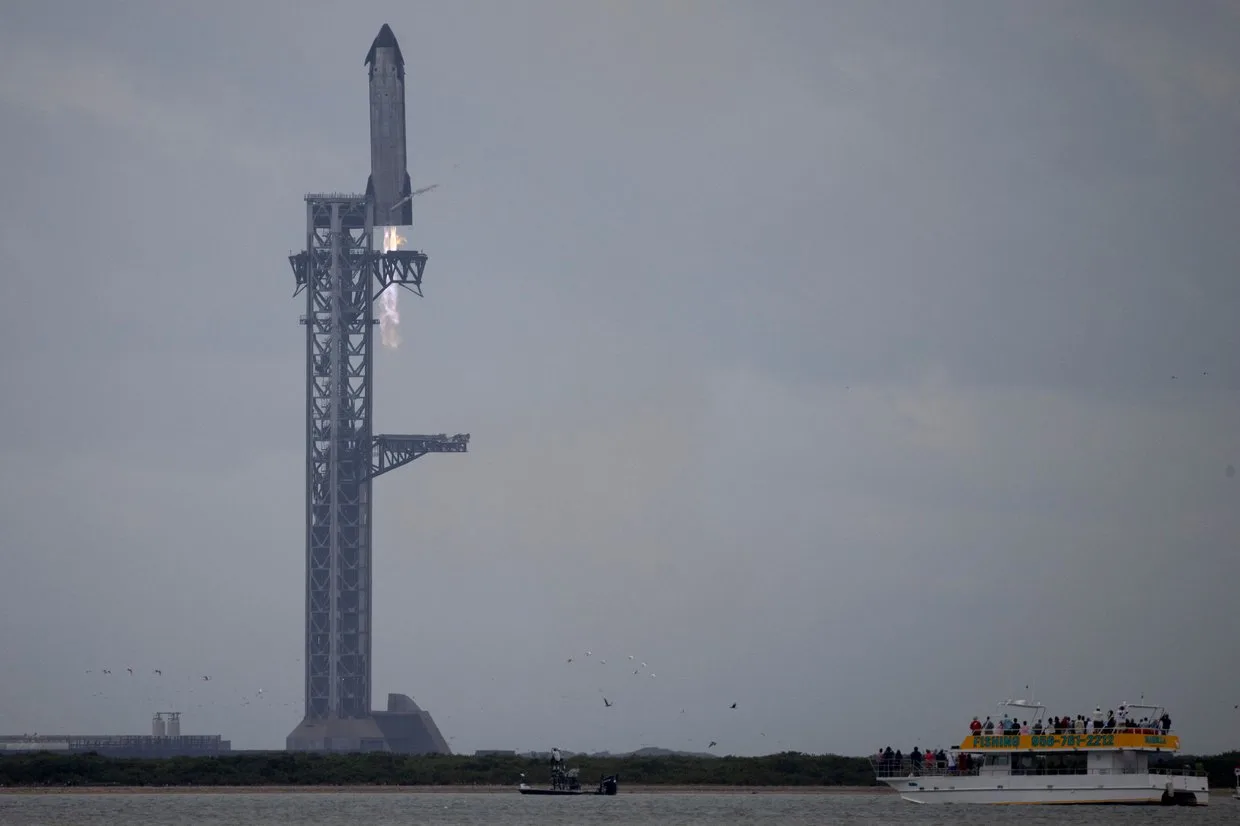
Some things are easy to catch. A 171 foot tall spacecraft falling back toward Earth is not one of them. Morning Brew reports that SpaceX did exactly that on Saturday, in what founder Elon Musk called an epic day on X, bringing the company closer to a fully reusable rocket. The upper part of Starship came back, relit three of its engines as it approached, and hovered beside the launch tower while two robotic arms, nicknamed chopsticks, clamped down and held it.
Starship had launched on Friday afternoon from the southern tip of Texas and successfully entered orbit to deploy 26 Starlink satellites. So the flight was not a stunt with an empty ship. It carried a real payload, delivered it, and then the vehicle that delivered it came home to be caught instead of lost. That sequence is the whole point of the program, performed in public, in daylight, with boats full of watchers offshore.
The booster catch failed, and the timeline held
The day was not flawless, and Morning Brew does not pretend otherwise. SpaceX failed to catch the first stage Super Heavy booster, which aborted its attempt because of a slight underperformance of engines, in Musk words on X. SpaceX has caught Super Heavy on three previous occasions, and Musk said this failure does not change the timeline for fully reusable rockets.
That detail matters for anyone who builds hard things in public. A partial success with one clear failure is still progress you can measure, as long as you report both halves honestly. The booster miss is data. The upper stage catch is proof. Treating a setback as information instead of a verdict is how a program that catches rockets out of the sky gets built, one flight at a time.
Why reuse changes the money
Morning Brew puts the economics plainly. Being able to quickly reuse rockets would save millions of dollars per mission and allow Starship to undertake more launches. An aircraft you throw away after one flight would make air travel a rich person hobby. Rockets lived under that math for decades, and every part of the space economy, from satellite internet to research payloads, paid for it.
The company also plans to use Starship to transport people and cargo to the moon. The spacecraft is supposed to participate in its first NASA mission, Artemis III, next year. Florida readers have a front row relationship with that future, because lunar missions and the crews and cargo behind them run through the Space Coast, an easy drive from the Gulf Coast communities this site covers.
Build things that come back to you
There is a creator lesson inside the engineering. Reusable beats disposable in almost every business. A launch video you can only use once is a booster in the ocean. A body of footage, a client relationship, and a system you can fly again next month is a caught Starship. The upfront work is heavier, and the second use is where the profit lives.
Watch what SpaceX attempts next, and watch how plainly it reports the misses. The companies and creators who win long games tend to share that habit: build for reuse, publish the attempt, count the failure honestly, and fly again. Saturday catch will be replayed for years. The aborted booster catch will be a footnote, which is exactly where honest failures belong.
Sources and further reading
Sources were checked for this article. Tool features, prices and availability can change. Product claims are attributed to their publishers.