Seed Oil Free Snacks Just Became a Billion Dollar Business
Sales of seed oil free products soared 72 percent to one billion dollars in a year, and big snack brands are reformulating even as dietitians dispute the fears.
A billion dollars of snacks cooked in something else
Morning Brew reports that sales of seed oil free products soared 72 percent to one billion dollars in the past year, citing Bloomberg reporting. Shoppers are seeking out foods made without canola, corn, sunflower, and other seed oils, and brands are racing to fill shelves with alternatives cooked in butter, beef tallow, and olive oil, even though those swaps cost more to produce.
The demand did not start in a lab. It started with health influencers in the MAHA movement promoting claims that seed oils lack valuable nutrients, contain toxins, and drive inflammation, with Health Secretary Robert F. Kennedy Jr. arguing the oils sit behind the rise in obesity. Whether or not the science supports the fear, the buying behavior is now measurable in nine figures and climbing.
The experts push back, and the market keeps moving
Morning Brew gives dietitians their full say. Moderate seed oil intake is associated with improved heart health, since seed oils carry unsaturated fats while animal oils carry cholesterol raising saturated fats. Human studies have shown no causal link between seed oil consumption and increased inflammation, and one expert told NPR that fears about toxins in foods cooked with seed oils are unfounded. On the evidence, the panic looks shaky.
Experts still advise avoiding ultra processed foods, but for their sugar and salt, not their oils. None of that has slowed the shelf space. PepsiCo and Utz Brands are among the giants building seed oil free lines, because a shopper belief does not need a consensus statement to move a purchase order. The market is responding to what people feel at the grocery cart, not only to what studies conclude.
A label became the product
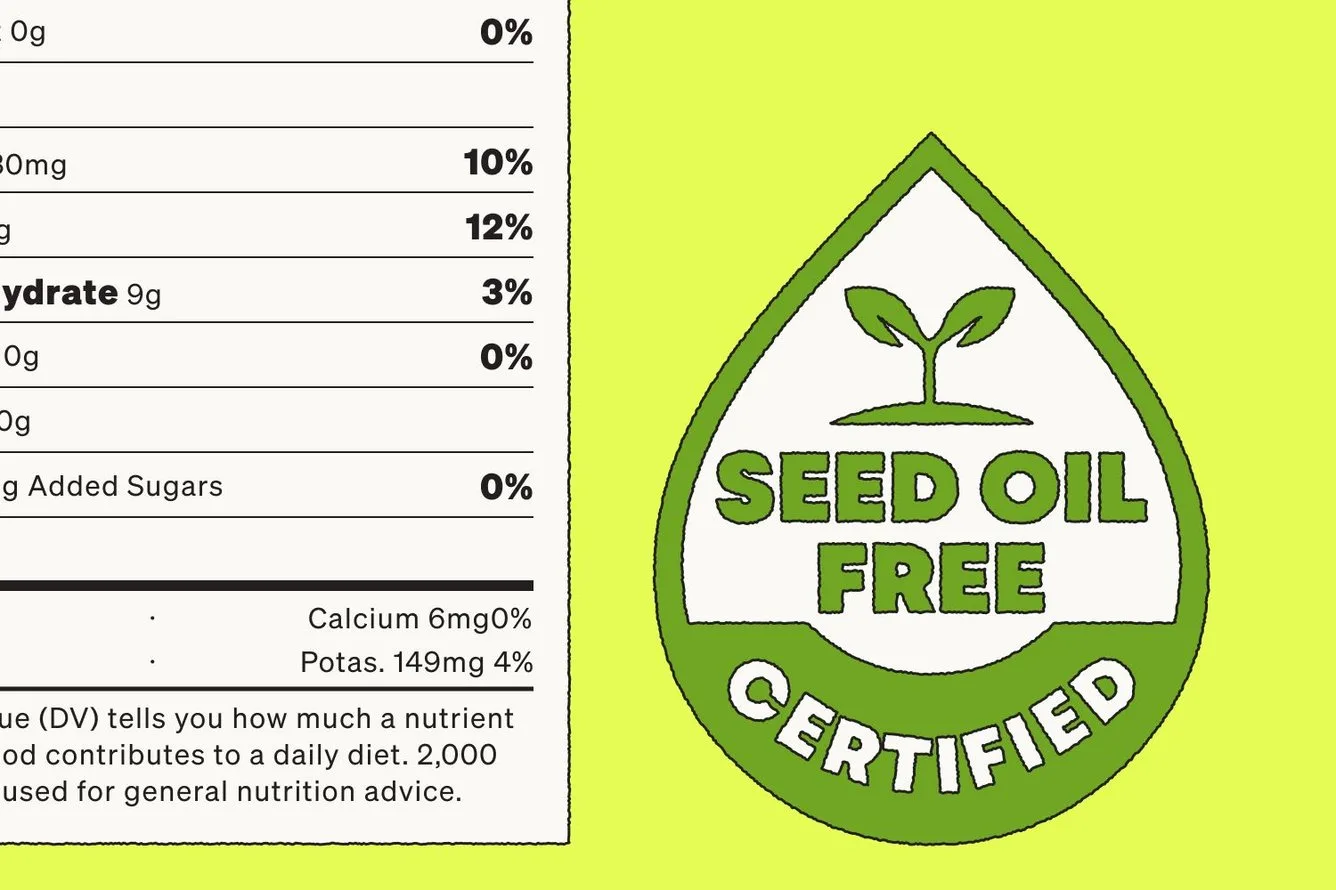
Notice what is actually being sold. The winning package does not promise a better chip first. It promises an absence, certified and stamped on the front: no seed oils. A droplet badge reading Seed Oil Free Certified does the persuading before a single ingredient is compared, the same way gluten free and organic labels built premium categories out of what a product leaves out.
That is a lesson in how categories form. A clear enemy, a simple badge, and a story a shopper can repeat in one sentence. The brands winning this wave did not wait for the debate to settle. They reformulated, certified, and shipped while slower competitors were still drafting statements about the science, and they now own the shelf position everyone else has to chase.
What builders should take from the seed oil wave
First, listen for the belief underneath the trend in your own market. Clients buy outcomes and reassurance long before they buy specifications, whether the product is a snack, a photo package, or a film. If your buyers share a worry you can honestly solve, naming that solution on the front of the offer is not pandering. It is clarity, as long as the claim you print is one you can stand behind.
Second, move at the speed of the shelf, not the seminar. You can respect the evidence, say plainly where experts disagree, and still serve the customer standing in front of you today. The seed oil story rewards the brands that did all three at once. In every industry, the gap between what people are asking for and what incumbents feel comfortable selling is where the next billion dollar category hides.
Sources and further reading
Sources were checked for this article. Tool features, prices and availability can change. Product claims are attributed to their publishers.