Shared Meta Muse Chats Were Findable Without the Link
Claroc found more than 6,800 shared Meta Muse chat addresses in public web records, and Meta paused the sharing feature while it investigates. The Neuron reports the chat title sat inside the address itself, and some shared pages held loan applications, revenue reviews, and staff calendars.
Sharing a chat publishes a page
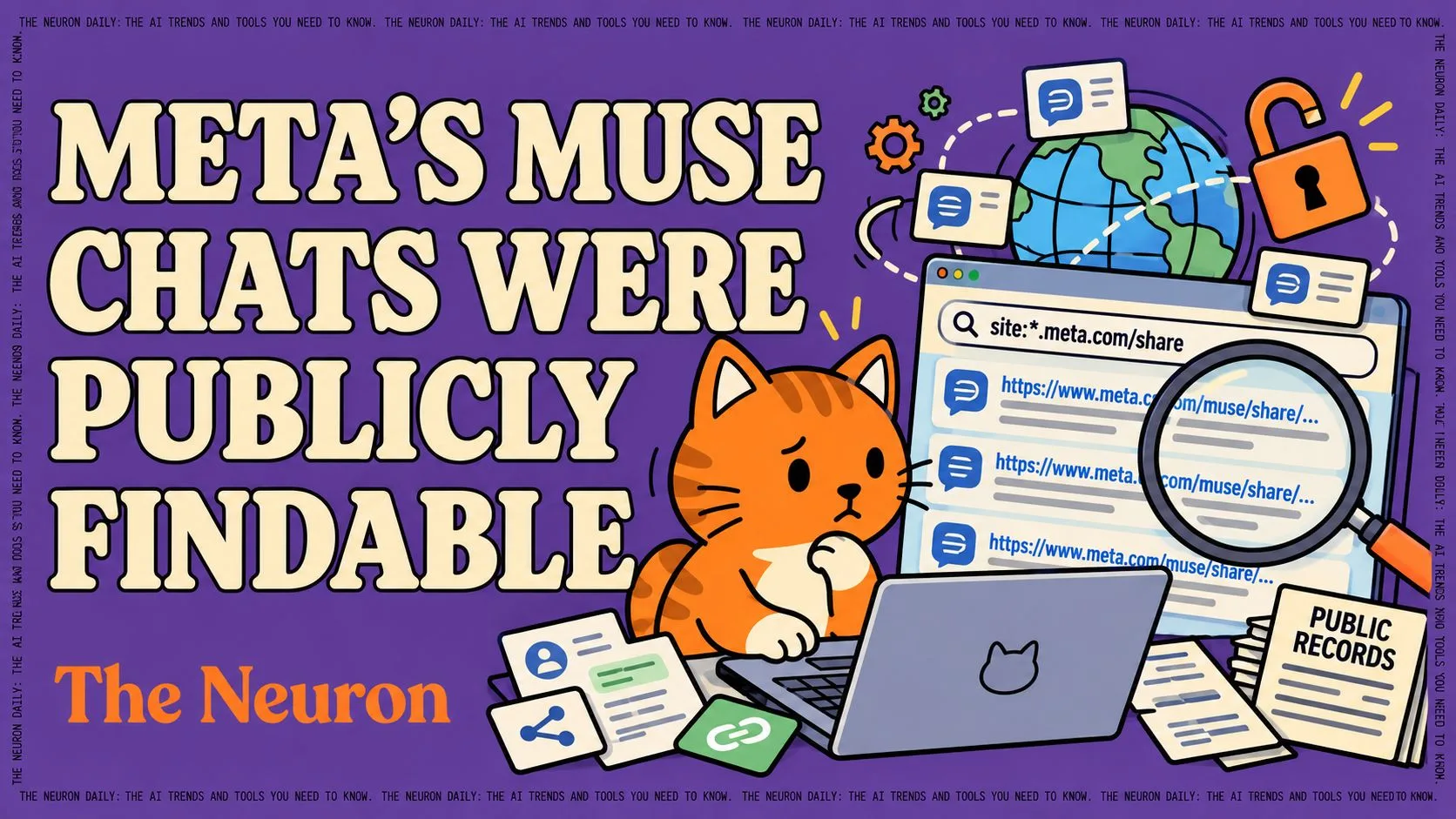
Security firm Claroc says anyone could find chats shared from Meta Muse app without being sent the link. The Neuron reports Claroc found more than 6,800 share addresses in public internet records, and The Verge reports Meta paused Muse sharing while it investigates.
Tap share in Muse and the chat becomes a web page that opens for anyone who has the link, with no login needed. That openness is the feature, because it is how a coworker or a client reads the chat. It is also the risk, because a shared link is not private once the page exists.
The chat title was printed inside the address
The twist is how Muse built each address. The page address combined the chat title with a random code, so a chat about a budget review carried that topic in readable words inside the link itself. The random code was supposed to make the address hard to guess.
It did not stay secret. Every time a browser opens a page, it looks the address up in DNS, the system that turns web addresses into server locations. Services called passive DNS log those lookups and let people search them. Claroc searched one and the chat titles came back readable, like a table of contents. The full address, code included, was logged the first time anyone opened the page.
What strangers could open and read
Claroc opened a few hundred of the pages without logging in. Most were harmless, like small business sites and event calendars. A minority were the kind of thing nobody means to publish:
- Prep notes for a confidential call with a frontier AI lab, including an internal contact and a meeting time
- An internal revenue review at a marketing company, marked for its chief executive
- A small business loan application with the amount requested
- A staff vacation calendar covering a full year and listing dozens of employees
The app is big, and the caveats matter
Muse is not small. Sensor Tower data cited by The Neuron shows the app passed 10.9 million downloads in its first 40 days, and Meta put 39 percent of its October advertising spend behind it. An app collecting that much trust that fast collects sensitive chats too.
Keep the caveats in view. Claroc sells software that spots risky AI sharing, so it has a stake in this story. Its search covered one service, one address pattern, and a short window, and it reports no evidence anyone misused the pages, which were public because their owners shared them. Claroc reported the issue to Meta on October 8, and still spotted 27 new share addresses on the day it last checked.
A safer way to share AI work
Treat every share link in every AI app as a public web page, because that is what it is. Before you send one, read the chat the way a stranger would, and ask what it reveals about a client, a price, a plan, or a person who never agreed to be in it.
- Never share a chat that holds client names, prices, contracts, or unreleased plans
- Copy the useful part into a document you control, and share that document instead
- Give the copy a plain title that reveals nothing about the client or the deal
- Delete shared chats you no longer need, and assume old links still work until you check
The lesson travels beyond one app
Nothing here required a hacker to break in. The door was the share button, and the address on the door was written in plain language. Creators now do real client work inside AI chats every day, which makes chat hygiene part of client trust.
The fix is boring and fast. Share less, copy out only what the other person needs, and keep the working chat private.
Sources and further reading
Sources were checked for this article. Tool features, prices and availability can change. Product claims are attributed to their publishers.