Before the Doctor Walks In, an AI Has Already Interviewed the Patient
Google tested its medical chatbot AMIE with 98 real patients ahead of urgent care visits, and the final diagnosis landed on the AI's list of possibilities 90 percent of the time. The Neuron also flagged Utah pilots that move AI closer to approving prescriptions.
Ninety eight patients talked to the chatbot first
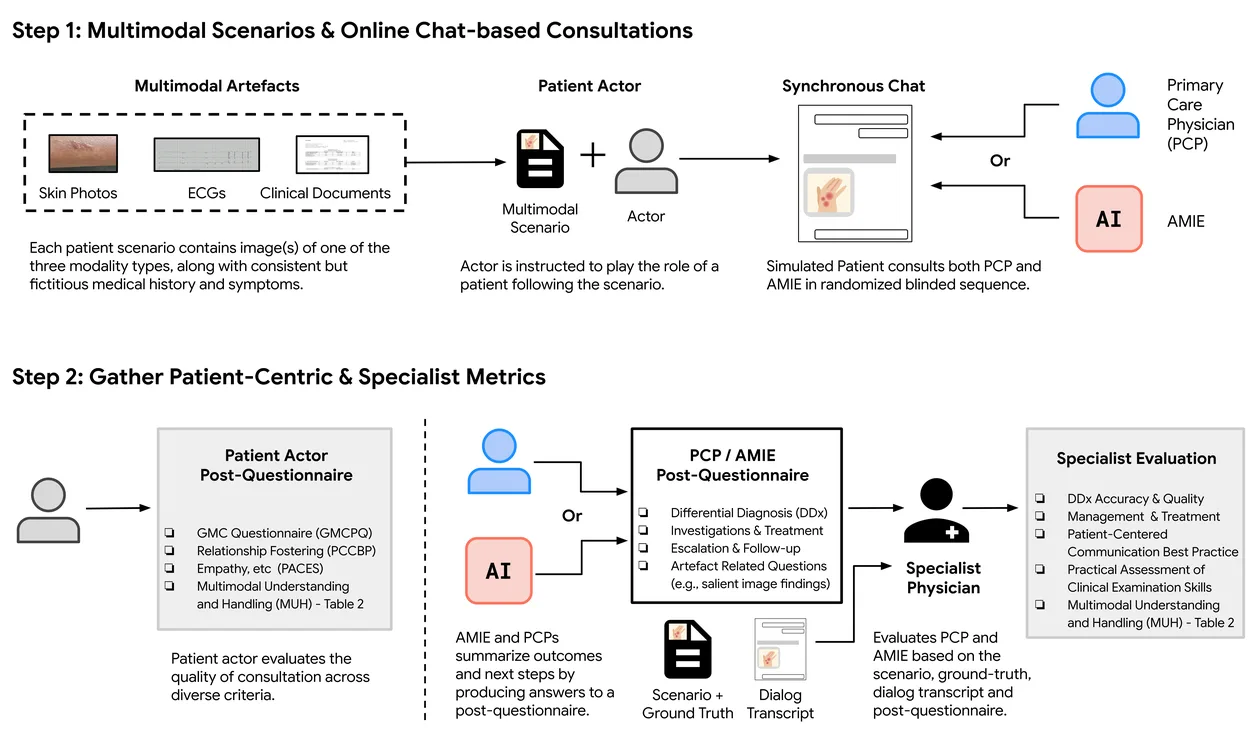
Google tested its medical AI, AMIE, with 98 real patients ahead of urgent care appointments, according to The Neuron's October 11 Sunday edition. Patients described their symptoms over text, AMIE asked follow up questions, and the doctor received the full conversation plus a summary before walking in. The idea is simple: let the AI collect the story so the human can start with the story already told.
It is worth naming what AMIE did not do. It did not diagnose anyone on its own or decide treatment. It interviewed, organized, and summarized: the same first ten minutes a nurse or an intake form usually owns, only conversational and instant.
The results were strong for a first contact tool. Google says the doctor's final diagnosis appeared on AMIE's list of possible diagnoses 90 percent of the time. A physician monitored every single chat and could step in at any moment. Supervisors spotted one hallucination and added clinical information in five conversations, and no chat triggered the study's preset stopping rule.
Utah is testing how much further AI can go
The same edition pointed to Utah, where approved healthcare AI pilots stretch the role further. Review loosens step by step, and only with state approval at each stage:
- August AI's planned pilot could let AI approve a 90 day refill of certain existing, non controlled medications at the same dose, with review moving to after delivery
- Nolla Health's acne pilot is already active, with two physicians reviewing every prescription at the start
- Expect Fitness won approval for a pelvic floor care pilot that could ease toward spot checks for lower risk cases
- Healthleap scans hospital records to flag malnutrition risk for dietitians, and Teladoc's SoloScribe drafts clinical notes during visits
The pattern matters more than the hospital
Strip away the medical setting and the pattern is one every service business will recognize. The AI handles the intake interview, the structured first conversation that collects the story before the expert arrives. Creative work runs on the same shape: the discovery call before a shoot, the brief before a design, the questions before a quote. Whoever builds a good intake agent owns the first impression of the business.
Honesty is the hidden variable in all of this. Patients may tell a chatbot things they would soften for a human, which can help. They may also rush, joke, or leave out the embarrassing detail that actually matters, which can hurt. The supervision model in this trial is the bridge between those two risks: AI speed, with a clinician close enough to catch the story going sideways.
The Neuron's own caution is the part to keep. The trial had no comparison group, and Utah's pilots only loosen human review step by step, with approval at each stage. That is the right order for our studio too: let AI prepare the work, keep a human checking anything that leaves the building, and widen the leash only after the misses are counted.
See how we put AI to work for clients
Sources and further reading
Sources were checked for this article. Tool features, prices and availability can change. Product claims are attributed to their publishers.