
Tesla Is Ending Cybertruck Production After Selling a Tenth of Its Goal
Tesla will stop building the Cybertruck by mid 2027 after selling just under 73,000 trucks against a predicted 250,000 a year. The hype worked. The product math never did.
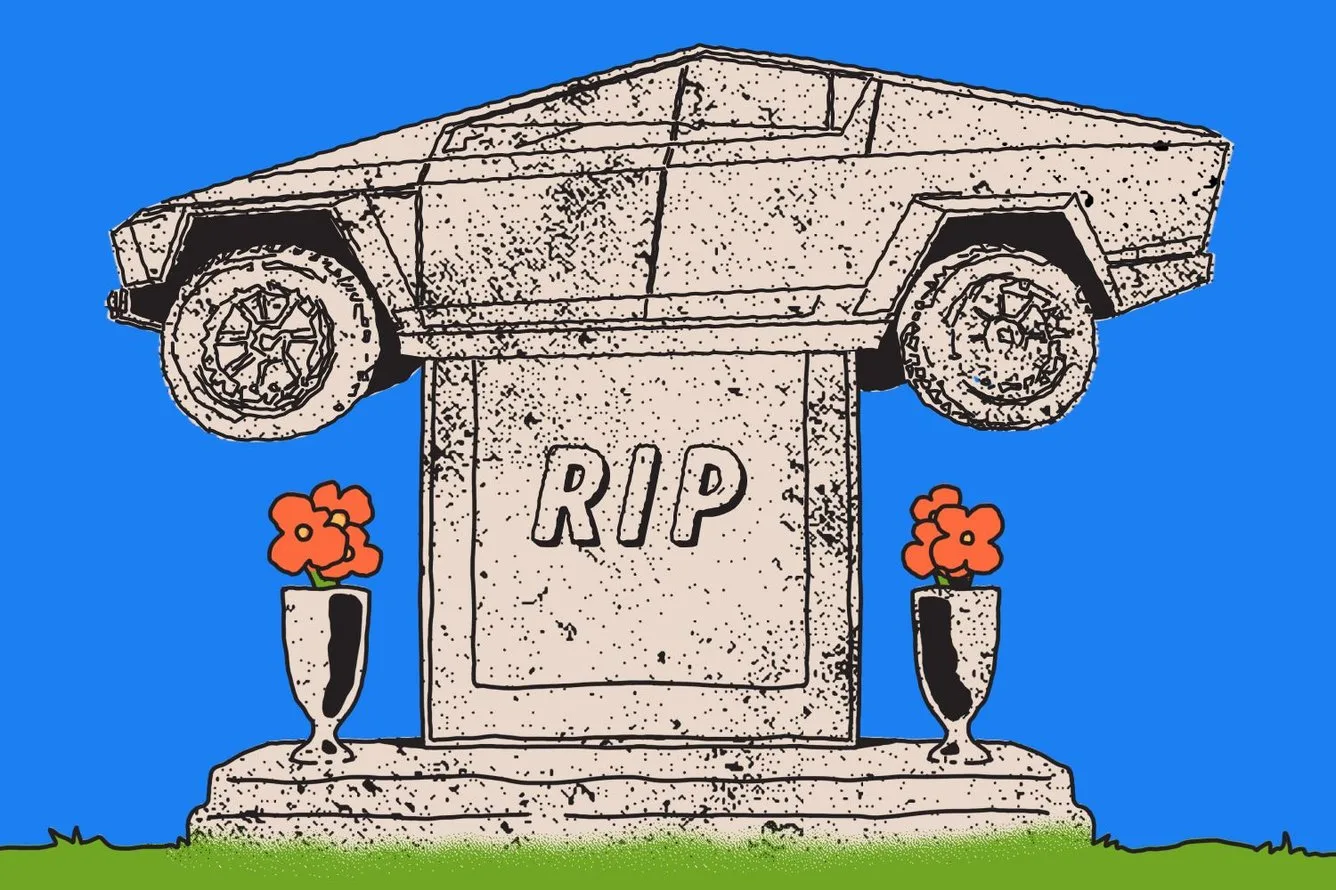
The most photographed truck in America is being retired
Morning Brew reports that Tesla will stop producing the Cybertruck at its Texas Gigafactory by mid 2027, a decision Elon Musk announced this week to make room for the autonomous Cybercab. Few products in recent memory won more attention with less market to show for it. The truck became a fixture of highway photos and social feeds while quietly becoming what Morning Brew flatly calls a commercial flop.
The scoreboard tells the story. Musk predicted yearly sales would reach 250,000 vehicles. Just under 73,000 have been sold in total so far, according to data from Motor Intelligence, roughly a tenth of one year of the goal spread across the whole run. US sales fell from 38,965 in 2024 to 20,237 in 2025, and they are down a further 28 percent this year.
A launch nobody forgot, a product that drifted
The Cybertruck arrived with the strongest opening a product can buy. At its 2019 unveiling, where the design chief famously broke the supposedly bulletproof window on stage, Musk billed the stainless steel pickup as the best product Tesla had ever made. The pitch was specific: a futuristic design, a planned price of 40,000 dollars, and a version offering 500 miles of range, aimed squarely at the lucrative pickup market.
What buyers eventually got was different on nearly every line. Covid delayed the release until late 2023, demand at launch was lukewarm, and recalls followed a string of technical issues. The truck ended up costing about 60,000 dollars, and its range never passed 325 miles. Sales dropped further after Musk vocally backed President Trump and the truck hardened into a polarizing symbol, loved by a loyal cult following and avoided by much of everyone else.
Attention is not the same as demand
This is the lesson that travels far beyond car factories, and it lands directly on creators and small brands. The Cybertruck proves that a launch can dominate culture and still miss the market. People photographed it, argued about it, and posted it constantly. Far fewer people signed for it. Attention measured in posts is a vanity number when the offer, the price, and the delivered product tell three different stories.
Notice where the trust leaked out. It was not the strange design. Plenty of strange products sell when they keep their promises. The damage came from the gap between the announced price and the sticker, between the promised range and the real one, between the unveiling confidence and the recall headlines. Every gap taxed the next claim the company made, until even genuinely loyal fans were carrying the whole market alone.
What Tesla does next, and what you should do first
Tesla is not retreating. After the Cybertruck ends, the company will build just two human driven models, the Model 3 and the Model Y, while pushing a nationwide rollout of its two seat autonomous Cybercabs, which already carry passengers in Austin. The lesson is not that bold bets fail. It is that Tesla can afford to retire a flop and pivot to the next bet. A small studio usually gets one launch reputation at a time.
So audit your own offer the way a buyer would. Does the price on your page match the price in your pitch? Does the delivered work match the portfolio that sold it? Is your most talked about piece also your most bought one, and if not, which number are you actually steering by? Kill the gap between promise and product before the market does it for you, loudly, and on a schedule you do not choose.
Sources and further reading
Sources were checked for this article. Tool features, prices and availability can change. Product claims are attributed to their publishers.