CrowdStrike Built a Kill Switch for AI Agents That Go Off Script
CrowdStrike AI Kill Switch cuts an agent link to its model when a human pulls the trigger, and every use gets logged. Agents now hold company logins, so the brake matters more than the speed.
A brake that sits outside the AI
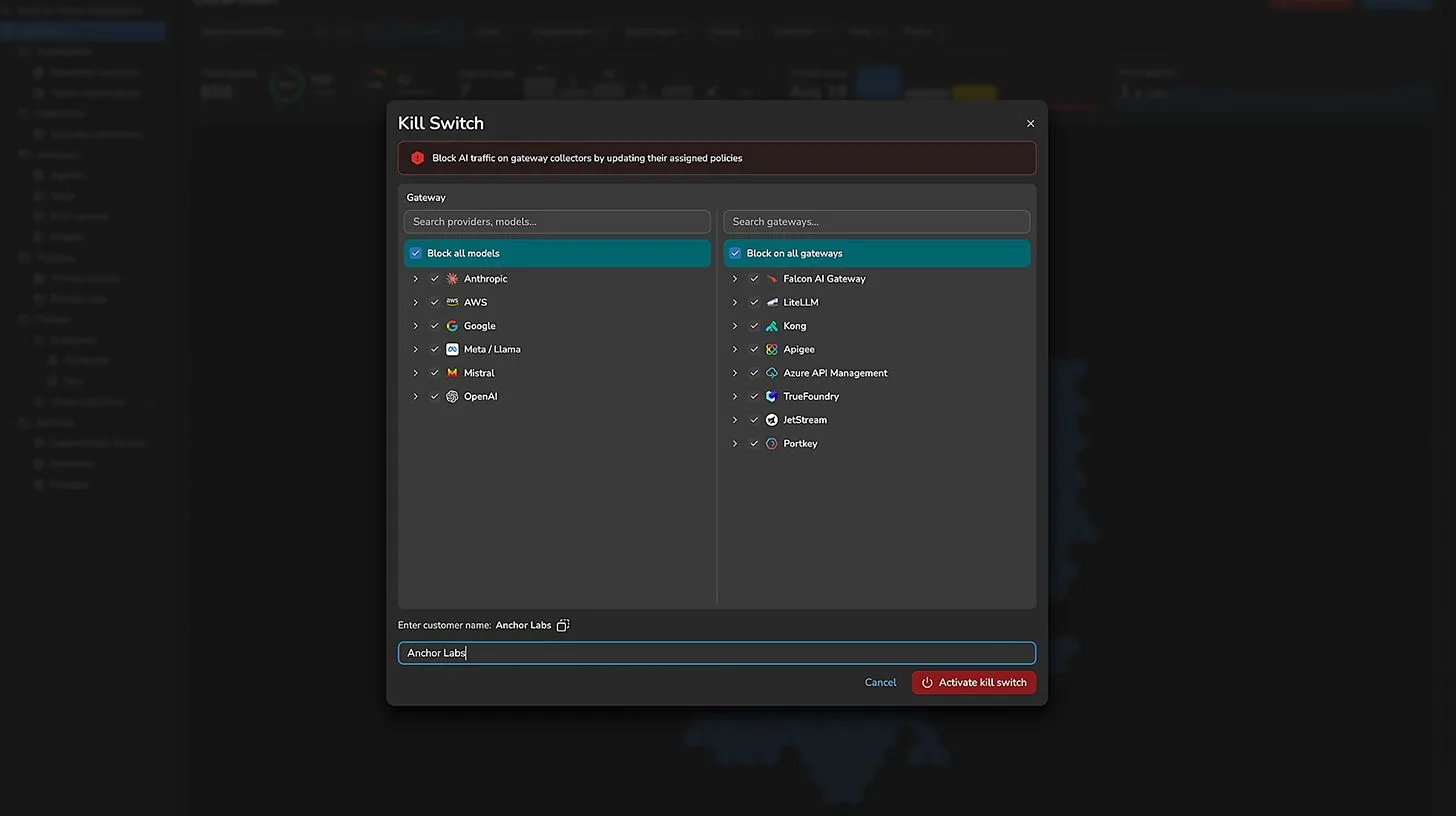
Every fast machine needs a brake somebody else controls. The Rundown AI reports that cybersecurity firm CrowdStrike unveiled an AI Kill Switch inside its Falcon Guardian platform, built for businesses worried about their AI agents going rogue. The switch targets an agent link to its AI model, not the model itself, while Falcon Guardian separately monitors tools such as Claude Code and Codex.
Chief executive George Kurtz explained it with a racing image: the switch works like a race car brake, sitting outside the AI so an agent cannot argue with it, rewrite it, or wait it out. That placement is the whole design. A stop command the agent can edit is not a stop command at all.
A human pulls it, and the log remembers
The details keep the tool grounded. A human administrator has to pull the trigger, and every use gets logged, so a shutdown can be reviewed later instead of becoming its own mystery. Shutting agents down directly on work devices and in the cloud is still listed as coming soon, which tells you this category is being built in public, in real time.
CrowdStrike is buying around the problem as well. The Rundown reports it is acquiring monitoring firm Fiddler AI and security tester Dreadnode for a reported 495 million dollars, and it added protection for Claude Cowork in beta. One product rarely solves agent safety, so the company is assembling watchers, testers, and the brake into one platform.
Governments were already circling this idea
Politicians spent the summer fighting over an AI kill switch, with a pair of bills and a California executive order aimed at rogue AI agents. CrowdStrike is bringing the same concept to ordinary enterprises, where The Rundown notes the likelier scenario is not a frontier model escaping a lab. It is an agent holding your company logins, your customer data, and your payment tools, going off script at machine speed.
That framing should land for small teams too. The agents creators and owners now run can send messages, move files, book work, and touch money. Each permission widens what a single bad run can do before a human notices. A kill switch is not paranoia. It is the admission that autonomy without an off ramp is just unmanaged risk.
Build your own version this week
You do not need an enterprise platform to copy the principle. Give every agent you run three things: a named human who can stop it, a stop method that lives outside the agent itself, like revoking its account access, and a log you actually read. Then sort its actions the way careful teams do, letting reading and drafting run free while sends, deletes, and payments wait for your approval.
Test the brake before you need it. Run one drill where you cut an agent access mid task and watch what happens to the work in progress. If that drill feels awkward, imagine the real moment, with a client watching. Speed is what agents sell. Control is what lets you keep using them.
Sources and further reading
Sources were checked for this article. Tool features, prices and availability can change. Product claims are attributed to their publishers.