Art Auctions Just Posted 6.8 Billion Dollars While Galleries Quietly Struggle
Sales at the big auction houses jumped 70 percent to 6.8 billion dollars in the first half of the year. The money is flowing to famous names, and working artists feel the squeeze.
The slump ended at the top of the market
Morning Brew reports that sales at Christie’s, Sotheby’s, and Phillips reached 6.8 billion dollars in the first half of this year, up 70 percent from a year earlier, after worldwide auction sales declined from 2022 through 2025. The global auction market has not performed this well since the first half of 2022, when it brought in 7.1 billion dollars, according to Bank of America.
The headline lots explain the heat. A Jackson Pollock sold for 181.2 million dollars, making it the fourth most expensive artwork ever sold at public auction, and a Mark Rothko went for 98.4 million dollars. At Art Basel in Switzerland, the median disclosed sale price nearly tripled to 287,500 dollars this year, per Maddox Gallery, a sign that spending picked up beyond the wealthiest collectors.
One November night could add another 450 million dollars
The test continues on November 18 in New York, when Sotheby’s will auction a famous collection of 12 paintings that Morning Brew says has been likened to a small museum with almost mythical status in the art world. The collection is expected to bring in more than 450 million dollars in total.
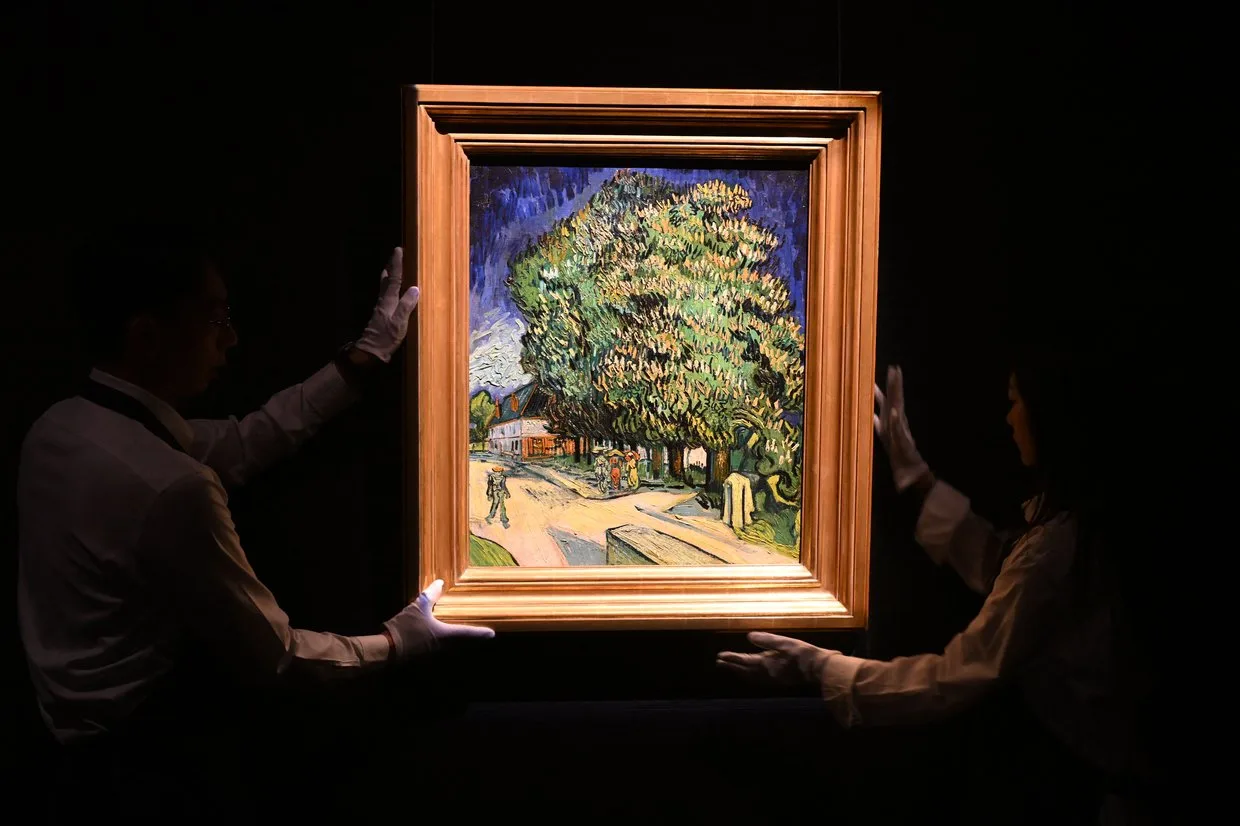
Its star is a rare Van Gogh, Chataigniers en fleurs, projected to sell for at least 180 million dollars. That figure would break the artist public auction record of 117 million dollars set in 2022. Auction houses also got help from collectibles, the entry point category for many younger bidders, which includes trading cards, watches, and even dinosaur fossils, while fine art remains the most important category at Christie’s.
Galleries are struggling while auctions celebrate
Here is the twist that matters for working artists. Morning Brew notes that galleries are struggling even as auctions post their best numbers in years, a point a former Art Basel global director made earlier this year. One reason may be that collectors are leaning away from emerging artists and embracing established, historical names, which happen to be exactly what auction houses sell best.
Read that as a market signal, not just art gossip. When money gets cautious, buyers run toward names that already carry proof. The same pattern hits photographers, filmmakers, and designers every cycle: clients pay premiums for portfolios with recognizable results and hesitate over new talent, even when the new work is strong. The gap is rarely about quality alone. It is about how much evidence a buyer can see before taking the risk.
What creators should steal from this rebound
The practical lesson is to make your proof easy to find and easy to price. Collectibles became the on ramp that brought younger bidders into rooms where fine art sells. Your version is a clear entry offer that lets a new client start small, see the quality, and step up to the flagship work without a leap of faith. Entry points do not cheapen a brand when the ladder is designed on purpose.
Then keep feeding the top of your own market. Publish finished work with results attached, keep past clients close, and make repeat buying simple, because established names win cautious money. The auction world just showed what demand looks like when confidence returns: it flows first to the names buyers already trust. Build that trust in public, long before you need the sale.
Sources and further reading
Sources were checked for this article. Tool features, prices and availability can change. Product claims are attributed to their publishers.