A Factory AI Startup Just Debuted at a 1.5 Billion Dollar Valuation
Former OpenAI research chief Bob McGrew came out of stealth with Arda, which plans factory assembly lines from design files. The Rundown reports a 160 million dollar Series A, a 1.5 billion dollar valuation, and a first customer, Anduril, cutting basic assembly instructions from 10 hours to 15 minutes.
The pitch is Claude for factory engineers
Former OpenAI Chief Research Officer Bob McGrew just came out of stealth with Arda, a startup building AI that helps factories set up assembly lines for new products far faster. The Rundown reports that Arda launches at a 1.5 billion dollar valuation after a 160 million dollar Series A round, which is a remarkable price for a company most people had never heard of a week ago.
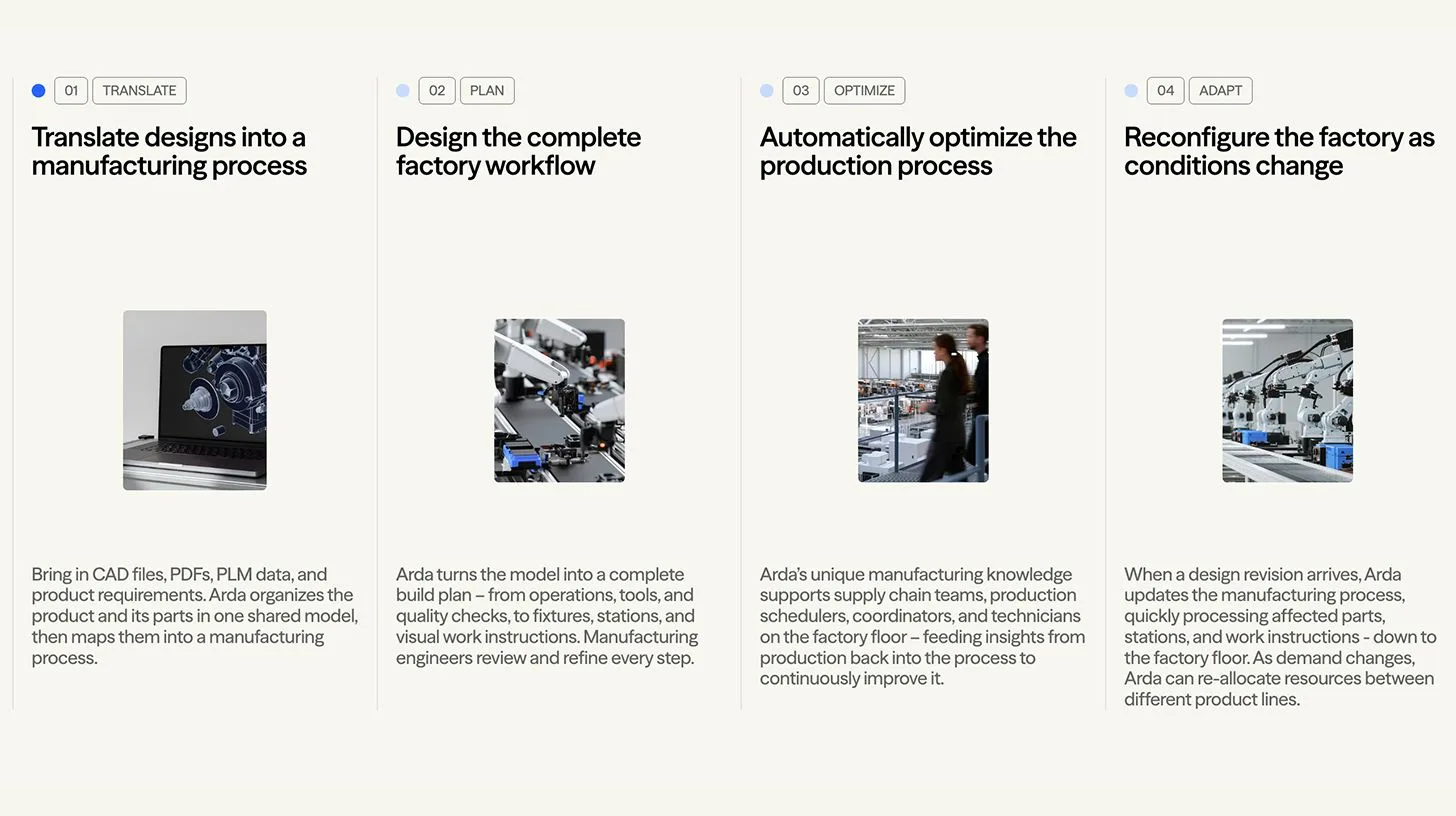
McGrew pitched Arda as doing for manufacturing engineers what Claude or Cursor does for programmers. The software reads design files and plans the build: operations, tools, stations, and the instructions a line needs to make a new product.
Why changing a factory line is so expensive
The comparison McGrew draws is with factories in Asia, where big crews can relearn a new design in about a day. An automated line in the United States moves slower. Reprogramming a single automated station can cost nearly 1 million dollars, and every new product can mean weeks of planning before the first unit rolls off.
That gap is the whole business. A factory that switches products quickly can take jobs competitors decline, and wastes less equipment time sitting idle. Speed of change, not speed of production, is the prize.
The first customer reports a dramatic time cut
Defense firm Anduril is Arda first customer, and its report is the number that will sell the next ten deals. Basic assembly instructions that once took 10 hours now take 15 minutes, and Anduril says it would be behind without the technology. Treat that as a customer claim in a launch story, not a measured study, but even a fraction of that gain would pay for a lot of software.
McGrew wants to go further. The next step is robots on the line, reprogrammed by Arda agents in days instead of weeks. His stated goal is a fully automated version of Shenzhen in West Texas, which tells you the ambition is not a planning tool. It is a new way to run a factory.
The exodus from the frontier labs continues
McGrew joins Mira Murati, Ilya Sutskever, and other senior OpenAI departures now running billion dollar startups of their own. Arda is the rare one building for physical production instead of building another frontier model, and that choice is part of the story investors are buying.
The timing helps too. The Rundown notes that Jeff Bezos project Prometheus raised 12 billion dollars for an artificial general engineer focused on designing physical products. Serious money now believes the next big AI market is not only words and images. It is things you can hold.
What builders outside factories should take from this
The pattern is the same one winning in creative work. The valuable tool is not the one that generates the most. It is the one that shortens the distance between a finished design and a finished product, inside a workflow that already costs real money when it moves slowly.
- Find the step where a skilled person spends hours translating one format into another
- Measure the current time honestly, the way Anduril 10 hours to 15 minutes claim does
- Sell the recovered time and the jobs it unlocks, not the model behind the tool
- Start with one customer whose result can carry the next round of sales
Planning is becoming the product
Factories spent a century getting better at making the same thing. The new contest is getting better at making the next thing, and AI that plans the changeover attacks exactly that weakness. Whether Arda holds its valuation is a question for its investors.
For everyone else, the signal is simpler. In field after field, the plan itself is turning into software work. People who document their process clearly will hand that work to AI first, and move first when the market changes.
Sources and further reading
Sources were checked for this article. Tool features, prices and availability can change. Product claims are attributed to their publishers.