Anthropic AI Is Improving Twice as Fast and Its Own AI Is Doing Most of the Work
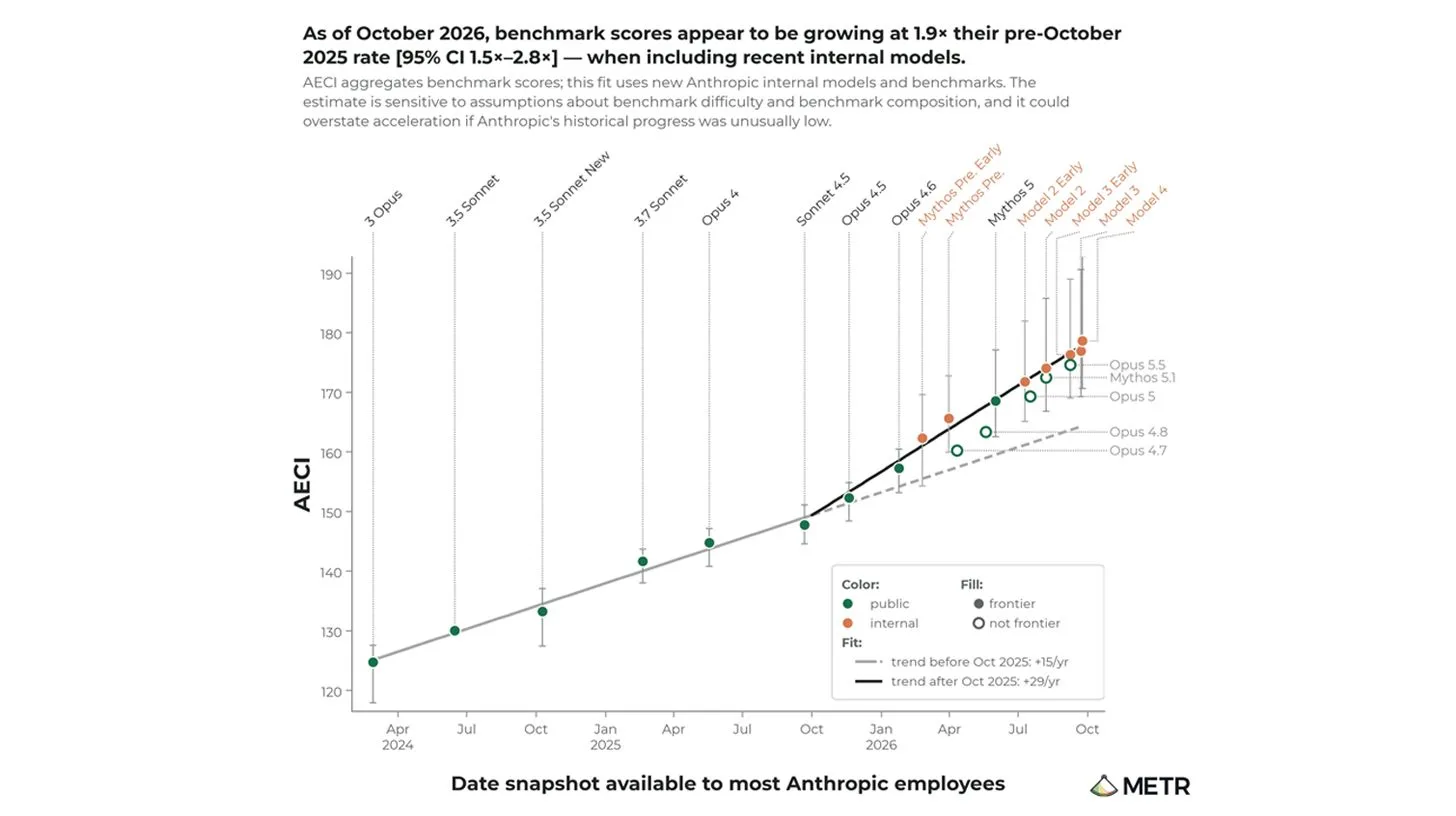
METR spent 11 weeks inside Anthropic data and concluded the lab progress is running about twice as fast as before, with AI itself credited for around 80 percent of the speedup.
Eleven weeks inside the lab
Most claims about AI progress come from the labs themselves, which makes this one different. The Rundown AI reports that METR, an AI evaluation nonprofit, just published findings from 11 weeks of inside access to Anthropic internal data and interviews with its staff. The conclusion is striking: the company AI progress is likely running about twice as fast as before, and its own AI is driving most of the jump.
The estimated range of the speedup over the 2024 and 2025 pace runs from 1.3 to 3 times, and METR credits AI for around 80 percent of the faster progress. This is the loop every lab talks about in theory, AI helping build better AI, apparently measured in production rather than pitched on a slide. METR also reported spotting no clear bottlenecks that would slow the loop down.
The models the public has not seen
The report revealed two internal models sitting ahead of the top ranked Claude Opus 5.5, including one called Model 4 that cleared 50 percent on all 15 tested benchmarks. Anthropic redacted most of the strongest evidence before publication, and co founder and safety lead Sam McCandlish said the heavy redactions were meant to avoid handing out a roadmap for others to go faster.
That detail cuts both ways. The public models creators use every day may be well behind what the lab runs internally, which means the tools you plan around today could look dated within months. Anthropic IPO filing defined a danger threshold as dramatically accelerated progress attributable to AI, and its update this week said that point may be close. Even METR own Ryan Greenblatt admitted he was seriously wrong after expecting a much slower speedup this year.
Why a lab speedup lands on your desk
A faster lab cycle compresses every planning window downstream. The workflow a studio builds this quarter, the prompts, the agent setups, the editing pipeline, now competes against internal models that are already a generation ahead. Pricing moves with it too, because capability that is scarce today tends to become a standard feature once the next model ships to everyone.
There is an opportunity inside the pressure. When the underlying models improve this quickly, the durable advantage shifts away from mastering one tool and toward judgment: picking the right jobs for automation, checking output like an editor, and owning the client relationship and the creative taste that no model release ships with. Labs can double their speed. They cannot double your reputation in a local market.
How to build when the ground keeps moving
Keep your workflows modular. Write your prompts, briefs, and checklists as documents you own, separate from any single tool, so a better model slots into the same system instead of forcing a rebuild. Revisit your stack on a fixed schedule, quarterly is enough, and swap only when a new model wins on your own real work, not on a benchmark chart.
And budget your attention like money. Every speedup headline is an invitation to chase the new thing. The operators who win this cycle will be the ones who automate the boring parts faster while protecting the human parts clients actually pay for: direction, taste, and accountability for the final product. The loop inside Anthropic is accelerating. Your edge is deciding, on purpose, what it should never touch.
Sources and further reading
Sources were checked for this article. Tool features, prices and availability can change. Product claims are attributed to their publishers.